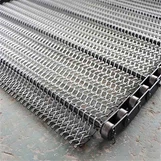
Friction conveyor belts are efficient and reliable continuous material handling systems that utilize the friction between the conveyor belt and its running surfaces (such as drive rollers or drums) to drive the flow of goods or products. These belts transport goods from one location to another through friction. Because they are typically made of rubber, plastic, or metal and are wear-resistant and heat-resistant, they are suitable for a wide range of industrial applications.


Working Principle
The way friction operates The primary foundation of a conveyor belt is the impact of friction. One or more driving rollers power the conveyor belt in this arrangement, creating enough friction between the belt and the rollers to pull the material along the belt. To improve traction and reduce drag, the driving roller is often positioned at the discharge end. The feeding end feeds the material, which then falls onto the revolving conveyor belt and is moved to the discharge end by the belt's friction.
Feature
1. Environmental protection and energy savings: The friction direct drive conveyor line has a straightforward design. The efficiency of the direct start station device utilized in the typical workplace is comparatively poor. Furthermore, the friction wheel is more important in terms of the machine's overall power savings and consumption reduction efficiency because it is composed of polyurethane.
2. Easy maintenance: Because this friction transmission system's overall design technology is rather straightforward, subsequent maintenance and use will also be straightforward.
3. Increase transportation efficiency: The goal of lowering energy consumption is accomplished by coordinating several sets of intermediate drives, which significantly lowers the motor power of the machine's main drive device at the head or tail and prevents it from operating in a high-power state for an extended period of time.
Advantage
1. High traction: The primary benefit is that even for heavy or irregularly shaped objects, effective material handling is possible due to the high friction between the conveyor belt and its surface.
2. Versatility: Often utilized, friction conveyor belts can be found in a variety of settings, such as assembly lines, sorting systems, and material transportation.
3. Steep Slopes: Friction conveyor belts, which are perfect for sectors like mining, recycling, and food processing, can move goods up steep slopes without sliding back if the surface material is appropriate.
4. Low Slip: These conveyor belts reduce the chance of slippage because of the enhanced surface friction, guaranteeing dependable and seamless operation.
5. Customizable: Conveyor belt friction can be tailored to the particular requirements of the application.
Maintenance and Care
1. Regularly check the wear condition of the conveyor belt to ensure it is in good condition.
2. Clean the surface of the conveyor belt to prevent material accumulation from affecting friction.
3. Ensure the transmission system is operating normally and adjust the tension in a timely manner to prevent slippage and damage.
Precautions
⚠️ Friction belts are only for use in combination with straight sections and vertical bends; they cannot be used with horizontal bends.
⚠️ Tension must be checked regularly; slack will cause slippage and transmission failure.
⚠️ Avoid contact between metal belts and corrosive media.
⚠️ For tubular conveyor belts, the fill factor must be calculated to ensure sufficient friction.
Hot Tags: friction conveyor belt, China, manufacturers, suppliers, factory, customized, wholesale, buy, price, belt for plastic industry, belt for jewelry products packaging machine, industrial belts for restaurant industry, light industry belt for maintenance service, light industry belt for paper making, orange light industry belt