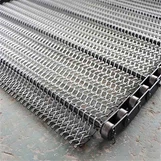
Lightweight conveyor belts are industrial belts specifically designed for high-precision, clean, and efficient indoor conveying scenarios, widely used in food processing, pharmaceuticals, electronics assembly, packaging, and logistics sorting industries. Lightweight conveyor belts are typically lightweight, slim, and easy to handle. Due to the relatively light weight of the materials they transport, they are suitable for applications requiring both relatively fine materials and high-precision conveying.
Feature
1. Diverse Materials: Common materials include PVC, PU (polyurethane), PE, and PP, meeting FDA/USDA food-grade standards and suitable for environments with high hygiene requirements.
2. Surface Treatments: Available in glossy, matte, patterned, and high-friction surfaces to meet the conveying needs of different products, such as anti-slip and anti-deviation properties.
3. Flexible Structure: Supports various processing methods, such as perforation, adding baffles, skirts, and guide strips, suitable for special scenarios such as inclined conveying, sorting, and positioning.
4. Strong Environmental Resistance: Possesses oil resistance, water resistance, low-temperature resistance, antistatic properties, and antibacterial properties, suitable for industries sensitive to environmental impact, such as cold chain, electronics, and medical.
Advantage
1. Increase production efficiency: By automating material transportation, a lightweight conveyor belt shortens the time spent on manual handling and raises the manufacturing line's overall efficiency.
2. Conserve space: Lightweight conveyor belts are small and may be shaped into a variety of shapes, including flexible bends and slopes, to accommodate intricate manufacturing settings.
3. Lower labor expenses: Automated transportation significantly lowers labor costs by eliminating the need for manual handling.
4. Enhance the working environment: automated transportation lowers the danger of worker harm and the amount of physical labor required for manual tasks.
5. Flexible adaptation to a range of occasions: lightweight conveyor belts are highly adaptable and appropriate for a range of work situations.
Common Applications
1. Food Industry: Conveying baked goods, fruits and vegetables, meat, dairy products, etc., meeting hygiene standards, easy to clean, and preventing contamination.
2. Electronics and Pharmaceuticals: Used for conveying precision components or medicines; smooth surface, no static electricity, reducing product damage and contamination risks.
3. Logistics and E-commerce: Suitable for parcel sorting, warehousing, and other scenarios, offering advantages such as high speed, low noise, and low energy consumption.
4. Textiles and Packaging: Used for conveying lightweight products such as clothing, paper, and packaging boxes, improving efficiency and reducing losses.
Maintenance
1. Frequent cleaning: After extended usage, light conveyor belts may gather dust, oil, or material residue. Frequent cleaning of the drive device and belt surface can assure its effective performance, particularly in the food processing industry where hygienic conditions must be maintained.
2. Verify tension and alignment: To prevent belt wear or transmission system overload from loose or tight belts, periodically verify that the conveyor belt's tension is suitable. To avoid deviation, simultaneously make sure the conveyor belt follows a predetermined path or a straight line.
3. Lubricate drive components: To guarantee the transmission system runs smoothly, the conveyor belt's drive components must be lubricated on a regular basis. This prolongs the equipment's life and lessens friction loss.
4. Examine wear and damage: Continually assess the conveyor belt's surface wear. Repair or replace it as soon as visible cracks, wear, or shedding are discovered to prevent lowering production efficiency.
5. Avoid a backlog of items:
Particularly for light things, try not to stack too many items on the conveyor belt. Uneven transmission or belt surface deformation will result from an excessive backlog.
Hot Tags: lightweight conveyor belt, China, manufacturers, suppliers, factory, customized, wholesale, buy, price, light industry belt for oil and gas products packaging machine, light industry belt for conveyor system, industrial belts for quality control, belt for transportation industry, belt for museum industry, high quality light industry belt