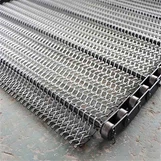
Nylon power transmission belts are industrial transmission belts with a high-strength nylon core and a three-layer composite structure: a nylon sheet base layer provides core tensile strength, while the top and bottom surfaces are covered with high-abrasion-resistant layers such as rubber, leather, or fiber cloth, depending on the application requirements. They are used to transmit power between two rotating shafts in various machines and systems. Transmission belts are available in thicknesses of 8mm, 1.0mm, 1.2mm, 1.5mm, 2.0mm, 2.2mm, 2.5mm, 3.0mm, 4.0mm, 5.0mm, and 6.0mm.
Advantage
Nylon Power Transmission Belt is smooth and continuous, and the speed and height can be adjusted as required. It also has low noise, suitable for a quiet working environment, creating no noise pollution to the operator. It has the advantages of low energy consumption, low cost and high cost performance. There will be no sharp corners or danger to personnel, and you can clean the belt directly with water.


Features
1. High tensile strength: The nylon core layer can absorb sudden impact loads without breaking, avoiding belt damage, speed loss and frequent belt tightening.
2. Low elongation: It has superior tensile strength and low elongation to prevent belt splitting or longitudinal cracking.
3. Durability: The strong and durable solid nylon core has a long service life, lateral strength, and is resistant to oil and chemical corrosion.
4. High transmission efficiency: The transmission efficiency exceeds 98%, ensuring efficient power transmission.
5. High transmission speed: The transmission speed exceeds 60 m/s, suitable for high-speed operation.
6. Good flexibility and directionality: Ensure stable operation under various working conditions.
7. Dimensional stability: Maintain good dimensional stability and reduce deformation during operation.
8. Constant friction coefficient: Ensure stable transmission performance.
Maintenance recommendations
1. Regular inspection: Check the belt for wear regularly and replace worn belts in time.
2. Cleaning: Keep the belt and drive system clean to avoid dust and oil that affect performance.
3. Tension adjustment: Ensure that the belt tension is moderate and avoid being too tight or too loose.
4. Storage conditions: Store the belt in a cool, dry environment and avoid direct sunlight.
Our service
1: Provide the technical design and solutions;
2: Installation guidance;
3: Designing and manufacturing of non-standard belt;
4: Professional technical training and guidance on site according to the contract;
5: Tele-technical consulting and services;
6: Other special technical service according to client's requirements.
Selection Guide and Precautions
Selection Parameters:
1. Belt Type: Determine whether it is an open belt (jointless), a spliced belt, or a special toothed belt.
2. Width and Thickness: Select based on the transmitted power, pulley size, and space constraints.
3. Cover Material: Choose PU (wear-resistant, food-grade optional) or CR (better oil resistance and aging resistance) based on the environment (presence of oil, humidity).
4. Surface Treatment: Options include smooth surface, rough surface (increased friction), or guide strips (to prevent deviation).
5. Color: Commonly available colors include green (general purpose), white (food-grade), and black.
Installation and Usage Points:
1. Tension: The initial tension must be appropriate. Too loose, and it will slip; too tight, and its lifespan will be reduced. A tension gauge is recommended.
2. Pulley Requirements: The pulley surface should be smooth and clean, with sufficient friction surface and appropriate crown (convex surface) to prevent deviation.
3. Connection and Maintenance: Use special adhesive or connector clips to ensure a smooth connection between the splices. Keep the area clean daily and avoid scratching with sharp objects.
Hot Tags: nylon power transmission belt, China, manufacturers, suppliers, factory, customized, wholesale, buy, price, interchangeable transmission belt, transmission belt for engines, transmission belt for load capacity, transmission belt for manufacturing processes, transmission belt for pumps, transmission belt for generators