In the modern industrial landscape, sustainability has become a crucial consideration for businesses across various sectors. As a supplier of PU timing belts, I often encounter questions from customers regarding the recyclability of these essential components. In this blog post, I will delve into the topic of whether PU timing belts are recyclable, exploring the materials, processes, and challenges associated with their recycling.
Understanding PU Timing Belts
PU, or polyurethane, is a versatile polymer that offers excellent mechanical properties, including high abrasion resistance, flexibility, and chemical resistance. These characteristics make PU an ideal material for timing belts, which are used in a wide range of applications, from automotive engines to industrial machinery.
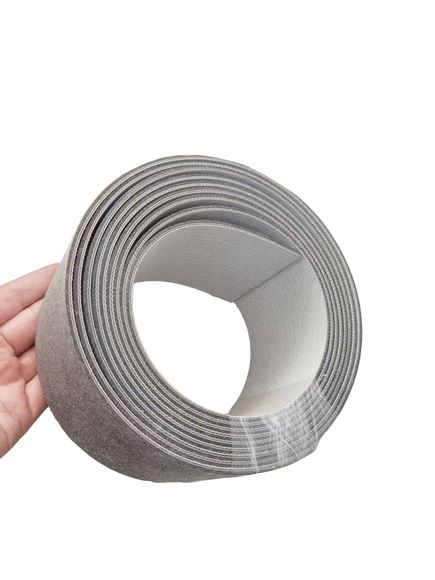
PU timing belts consist of a polyurethane body reinforced with a high-strength cord, typically made of materials such as aramid, glass fiber, or steel. The cord provides the belt with the necessary tensile strength to transmit power efficiently, while the polyurethane body protects the cord and provides a smooth surface for contact with the pulleys.
The Recycling Process
The recyclability of PU timing belts depends on several factors, including the type of polyurethane used, the presence of additives and fillers, and the condition of the belt. In general, thermoplastic polyurethanes (TPUs) are more easily recyclable than thermoset polyurethanes (TSUs) because they can be melted and reprocessed without significant loss of properties.
The recycling process for PU timing belts typically involves the following steps:

- Collection and Sorting: Used PU timing belts are collected from various sources, such as industrial facilities, automotive repair shops, and end-of-life product recycling centers. The belts are then sorted by material type, size, and condition to ensure efficient processing.
- Cleaning and Preparation: The collected belts are thoroughly cleaned to remove any dirt, debris, or contaminants. This step is essential to ensure the quality of the recycled material. Some belts may also require additional preparation, such as grinding or shredding, to reduce their size and facilitate further processing.
- Recycling: Once the belts are cleaned and prepared, they are processed using various recycling methods, depending on the type of polyurethane and the intended application of the recycled material. Some common recycling methods for PU include:
- Mechanical Recycling: This method involves melting the PU belts and reprocessing them into new products, such as injection-molded parts, extrusion profiles, or coatings. Mechanical recycling is the most common and cost-effective method for recycling PU, but it may result in some degradation of the material's properties.
- Chemical Recycling: Chemical recycling involves breaking down the PU into its constituent monomers or oligomers, which can then be used to produce new polyurethane materials. This method offers the potential for higher-quality recycled materials, but it is more complex and expensive than mechanical recycling.
- Energy Recovery: In some cases, PU timing belts that cannot be recycled through mechanical or chemical methods may be used as a source of energy through incineration or other thermal processes. While energy recovery is not a true recycling method, it can help to reduce the environmental impact of waste PU by converting it into useful energy.
Challenges and Limitations
Despite the potential for recycling PU timing belts, there are several challenges and limitations that need to be addressed. Some of the key challenges include:
- Material Complexity: PU timing belts often contain a combination of different materials, including the polyurethane body, the reinforcing cord, and various additives and fillers. This material complexity can make it difficult to separate and recycle the individual components, resulting in lower recycling rates and higher costs.
- Contamination: Used PU timing belts may be contaminated with dirt, oil, or other substances, which can affect the quality of the recycled material. Cleaning and removing these contaminants can be a time-consuming and expensive process, especially for large volumes of belts.
- Lack of Infrastructure: There is currently a limited infrastructure for recycling PU timing belts, particularly in some regions. This lack of infrastructure can make it difficult for businesses to find reliable recycling partners and may result in the disposal of used belts in landfills or through other non-recycling methods.
- Economic Viability: The cost of recycling PU timing belts can be relatively high, especially compared to the cost of producing new belts from virgin materials. This economic viability issue can make it challenging for businesses to justify investing in recycling programs, particularly in a competitive market.
Environmental Benefits of Recycling
Despite the challenges and limitations, recycling PU timing belts offers several environmental benefits. Some of the key benefits include:
- Resource Conservation: Recycling PU timing belts helps to conserve natural resources by reducing the demand for virgin materials. By reusing the existing materials, we can minimize the extraction and processing of raw materials, which can have a significant impact on the environment.
- Energy Savings: Recycling PU timing belts requires less energy than producing new belts from virgin materials. This energy savings can help to reduce greenhouse gas emissions and mitigate the environmental impact of the manufacturing process.
- Waste Reduction: Recycling PU timing belts helps to reduce the amount of waste sent to landfills or incinerators. By diverting these materials from the waste stream, we can minimize the environmental impact of waste disposal and extend the lifespan of landfill sites.
- Circular Economy: Recycling PU timing belts is an important part of the circular economy, which aims to keep materials in use for as long as possible and minimize waste generation. By closing the loop on the lifecycle of PU timing belts, we can create a more sustainable and resource-efficient industrial system.
Conclusion
In conclusion, while there are challenges and limitations associated with recycling PU timing belts, it is possible to recycle these materials through various methods, including mechanical recycling, chemical recycling, and energy recovery. Recycling PU timing belts offers several environmental benefits, including resource conservation, energy savings, waste reduction, and the promotion of a circular economy.
As a supplier of PU timing belts, I am committed to promoting sustainability and environmental responsibility in our industry. We are constantly exploring new ways to improve the recyclability of our products and to support our customers in their efforts to reduce their environmental impact. If you are interested in learning more about the recyclability of our PU timing belts or have any questions about our products, please do not hesitate to [initiate a discussion about potential purchases]. We would be happy to assist you and provide you with the information you need.
References
- "Polyurethane Recycling: A Review." Journal of Polymer Science, Part B: Polymer Physics, vol. 50, no. 1, 2012, pp. 1-18.
- "Thermoplastic Polyurethane Recycling: A Review." Polymer Degradation and Stability, vol. 96, no. 11, 2011, pp. 2021-2032.
- "Recycling of Polyurethane Foams: A Review." Journal of Applied Polymer Science, vol. 117, no. 3, 2010, pp. 1307-1319.