Hey there! As a guide conveyor belt supplier, I often get asked this question: Can a guide conveyor belt be repaired if it's damaged? Well, let's dig into this topic and find out.
First off, let's understand what guide conveyor belts are and why they're so important. Guide conveyor belts are used in a wide range of industries, from manufacturing to food processing. They help in guiding the products smoothly along the conveyor system, ensuring that everything moves in an orderly manner. They're like the unsung heroes of the industrial world, quietly doing their job day in and day out.


Now, when it comes to damage, guide conveyor belts can face various issues. It could be wear and tear from constant use, cuts from sharp objects, or even chemical damage in some industries. But the good news is, in many cases, these belts can be repaired.
Types of Repairs
Minor Wear and Tear
For minor wear and tear, such as surface abrasions, you can often use simple repair methods. One common approach is using a belt dressing or a special adhesive. These products can help to smooth out the surface of the belt and prevent further damage. They're relatively easy to apply and can extend the life of the belt significantly.
Cuts and Tears
When it comes to cuts and tears, the repair process gets a bit more involved. If the cut is small, you might be able to use a patch kit. These kits usually come with a special adhesive and a patch material that can be applied to the damaged area. It's important to clean the area thoroughly before applying the patch to ensure a good bond.
For larger cuts or tears, you might need to replace a section of the belt. This is a more complex process that often requires professional help. But don't worry, most suppliers, including us, offer repair services or can provide guidance on how to do it yourself.
Chemical Damage
Chemical damage can be a bit trickier to deal with. It depends on the type of chemical and the extent of the damage. In some cases, if the damage is limited to the surface, you might be able to clean the belt with a suitable solvent and then apply a protective coating. However, if the chemical has penetrated deep into the belt, it might be necessary to replace the entire belt.
Factors Affecting Repairability
Belt Material
The material of the guide conveyor belt plays a big role in its repairability. For example, belts made of rubber are generally more flexible and easier to repair than those made of plastic or metal. Rubber belts can be patched more easily, and the adhesive bonds better to the rubber surface.
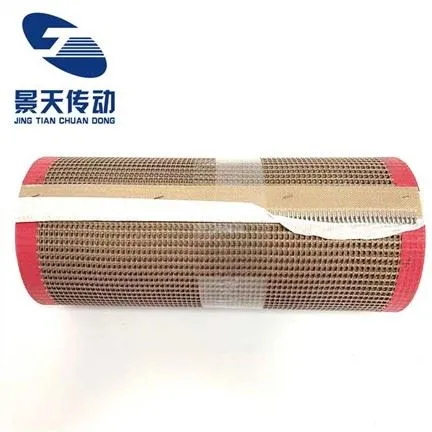
On the other hand, Flat Green Conveyor Belt and Teflon Coated Fiberglass Conveyor Belt have different properties. The Teflon coating on the fiberglass belt provides high-temperature resistance but might require special repair techniques. Similarly, the flat green conveyor belt, which is often used in light industries, might have specific repair requirements based on its material composition.
Damage Location
The location of the damage also matters. If the damage is near the edges of the belt, it might be easier to repair or replace a section. However, if the damage is in the middle of the belt, it could be more challenging. In some cases, the entire belt might need to be removed from the conveyor system to make the repair.
Age of the Belt
The age of the belt is another important factor. An older belt might be more prone to damage and might not hold up well to repairs. If the belt has been in use for a long time, it might be more cost-effective to replace it rather than trying to repair it.
Benefits of Repairing Guide Conveyor Belts
Cost Savings
One of the biggest benefits of repairing a guide conveyor belt is cost savings. Replacing a belt can be expensive, especially if it's a large or specialized belt. By repairing the belt, you can save a significant amount of money.
Minimizing Downtime
Repairing a belt also helps to minimize downtime. In a manufacturing or processing plant, every minute of downtime can cost a lot of money. By quickly repairing the belt, you can get the conveyor system up and running again in no time.
Environmental Impact
Repairing belts is also better for the environment. By extending the life of the belt, you reduce the amount of waste going to landfills. It's a small step towards a more sustainable future.
When to Replace Instead of Repair
While repairing guide conveyor belts is often a good option, there are times when it's better to replace the belt. If the damage is too extensive, such as a large tear that can't be patched or if the belt has multiple areas of damage, it might be more practical to replace it.
Also, if the belt is old and has been repaired multiple times, it might be time for a new one. A worn-out belt can cause problems with the conveyor system, such as reduced efficiency or even breakdowns.
Our Services as a Guide Conveyor Belt Supplier
As a guide conveyor belt supplier, we offer a range of services to help our customers with belt repairs. We have a team of experts who can assess the damage and recommend the best course of action. Whether it's a simple patch or a complete belt replacement, we've got you covered.
We also stock a wide range of belt materials, including Pvc Diamond Belt, flat green conveyor belts, and Teflon coated fiberglass conveyor belts. This means we can quickly provide you with a replacement belt if needed.
If you're experiencing problems with your guide conveyor belt, don't hesitate to reach out to us. We're here to help you keep your conveyor system running smoothly. Whether you need advice on repair, replacement, or just want to learn more about our products, we're just a call or an email away.
In conclusion, guide conveyor belts can often be repaired if damaged, but it depends on several factors. By considering the type of damage, the belt material, and the age of the belt, you can make an informed decision on whether to repair or replace. And if you need any help along the way, we're here to support you.
So, if you're in the market for guide conveyor belts or need assistance with repairs, contact us today. Let's work together to find the best solution for your conveyor system.
References
- Conveyor Belt Handbook, Industry Publishing Co.
- Guide to Industrial Conveyor Systems, Manufacturing Press