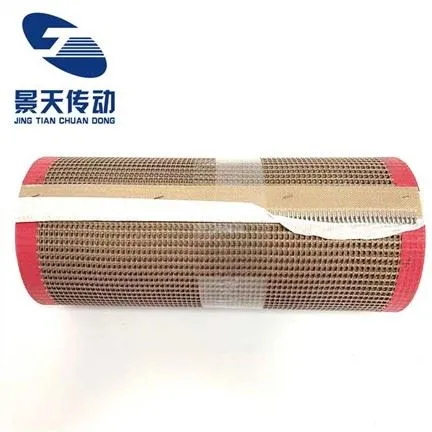
As a supplier of PVC Chevron Conveyor Belts, I understand how crucial it is to ensure the safety of operators who use these belts on a daily basis. These conveyor belts are a staple in many industries, including mining, agriculture, and manufacturing. They're great for moving materials up inclines because of their chevron design. But, like any heavy machinery, there are risks involved. In this blog, I'm gonna share some practical tips on keeping operators safe when using PVC Chevron Conveyor Belts.
1. Training and Education
First things first, proper training is the foundation of operator safety. Every operator should go through thorough training before they start using the PVC Chevron Conveyor Belt. The training should cover everything from the basic operation of the belt to emergency procedures.
Operators need to learn how to start, stop, and adjust the speed of the conveyor belt correctly. They should also know how to load materials onto the belt without overloading it, as overloading can cause the belt to slip or break. Additionally, training should include how to perform routine maintenance checks, like inspecting the belt for wear and tear, checking the tension, and making sure the rollers are in good working condition.
We, as a supplier, encourage our clients to arrange regular safety training sessions. These sessions can be refresher courses to keep operators updated on the latest safety protocols and best practices. It's also a good idea to provide hands - on training, so operators get real - world experience in handling the conveyor belt safely.
2. Personal Protective Equipment (PPE)
Another key aspect of operator safety is the use of personal protective equipment. Operators should always wear appropriate PPE when working with PVC Chevron Conveyor Belts. This includes safety helmets to protect their heads from falling objects, safety glasses to shield their eyes from dust and debris, and steel - toed boots to protect their feet from heavy objects or accidental impacts.
In some cases, operators may also need to wear gloves to protect their hands from cuts and abrasions. If the conveyor belt is used in a noisy environment, earplugs or earmuffs should be worn to prevent hearing damage. As a supplier, we often recommend our clients provide their operators with high - quality PPE and enforce its proper use.
3. Machine Guarding
Machine guarding is essential for preventing accidents. All moving parts of the PVC Chevron Conveyor Belt, such as the pulleys, rollers, and drive mechanisms, should be properly guarded. Guards can prevent operators from accidentally coming into contact with these moving parts, which can cause serious injuries like amputation or crushing.
The guards should be made of strong, durable materials and be securely attached to the conveyor belt. They should also be designed in a way that allows for easy access for maintenance and inspection. Regular checks should be carried out to ensure that the guards are in place and in good condition.
4. Maintenance and Inspections
Regular maintenance and inspections are vital for the safe operation of PVC Chevron Conveyor Belts. A well - maintained conveyor belt is less likely to malfunction and cause accidents. Operators should be trained to perform daily visual inspections of the belt before starting work. They should look for signs of wear, such as cracks, fraying, or uneven wear patterns.
In addition to daily inspections, the conveyor belt should undergo periodic professional maintenance. This includes checking the tension of the belt, lubricating the moving parts, and replacing any worn - out components. As a supplier, we can offer maintenance services or provide guidance on how to carry out proper maintenance procedures.
5. Emergency Stop Systems
Every PVC Chevron Conveyor Belt should be equipped with an emergency stop system. This system allows operators to quickly stop the conveyor belt in case of an emergency, such as a jam, a spill, or a person getting caught in the belt. The emergency stop buttons should be clearly marked and easily accessible from all operating positions.


Operators should be trained on how to use the emergency stop system effectively. Regular drills should be conducted to ensure that operators can react quickly in an emergency situation.
6. Risk Assessment
Before installing a PVC Chevron Conveyor Belt, a comprehensive risk assessment should be carried out. This involves identifying all the potential hazards associated with the use of the conveyor belt and implementing measures to control or eliminate these hazards.
The risk assessment should take into account factors such as the working environment, the type of materials being transported, and the frequency of use. Based on the results of the risk assessment, appropriate safety measures can be put in place.
7. Use of Compatible Equipment
When using a PVC Chevron Conveyor Belt, it's important to use compatible equipment. For example, the loading and unloading equipment should be designed to work well with the conveyor belt. Using incompatible equipment can cause problems such as overloading, uneven loading, or damage to the belt.
We, as a supplier, can offer advice on choosing the right equipment that is compatible with our PVC Chevron Conveyor Belts. This can help ensure the smooth and safe operation of the conveyor system.
8. Awareness of Other Conveyor Belt Options
While PVC Chevron Conveyor Belts are great for many applications, there are other types of conveyor belts available for different needs. For example, if you're dealing with high - temperature applications, you might want to consider a Teflon Coated Fiberglass Conveyor Belt or a Teflon Ptfe Coated Fiberglass Fabric Conveyor Belt. These belts are designed to withstand high temperatures and are suitable for industries like baking or metalworking.
If you're in the food processing industry, a Stainless Steel Wire Belt might be a better option as it's easy to clean and meets food safety standards.
In conclusion, ensuring the safety of operators when using PVC Chevron Conveyor Belts requires a combination of proper training, the use of PPE, machine guarding, regular maintenance, emergency stop systems, risk assessment, and the use of compatible equipment. As a supplier, we're committed to providing high - quality conveyor belts and supporting our clients in implementing safety measures.
If you're in the market for PVC Chevron Conveyor Belts or have any questions about conveyor belt safety, don't hesitate to reach out. We're here to help you find the right solutions for your business and ensure the safety of your operators.