Hey there! As a supplier of Red PVC Conveyor Belts, I often get asked whether these belts are heat-resistant. It's a crucial question, especially for industries that operate in high-temperature environments. In this blog, I'll dive deep into the heat resistance of Red PVC Conveyor Belts, comparing them with other heat-resistant conveyor belt options, and giving you all the info you need to make an informed decision.
Let's start by understanding what Red PVC Conveyor Belts are made of. PVC, or polyvinyl chloride, is a widely used synthetic plastic polymer. Red PVC Conveyor Belts are typically reinforced with polyester or nylon fabrics to enhance their strength and durability. They're known for their flexibility, good chemical resistance, and relatively low cost. But when it comes to heat resistance, things get a bit more complicated.
The heat resistance of Red PVC Conveyor Belts depends on several factors, including the quality of the PVC compound, the type of reinforcement, and the operating conditions. Generally speaking, standard Red PVC Conveyor Belts have a limited heat resistance. They can usually withstand temperatures up to around 60 - 80 degrees Celsius (140 - 176 degrees Fahrenheit) for short periods. If the temperature goes beyond this range, the PVC material can start to soften, deform, or even break down.
One of the main reasons for the limited heat resistance of Red PVC Conveyor Belts is the nature of the PVC itself. PVC is a thermoplastic, which means it becomes soft and malleable when heated and hardens when cooled. At high temperatures, the molecular structure of PVC starts to change, leading to a loss of its physical properties. Additionally, the plasticizers used in PVC can evaporate or migrate at elevated temperatures, further reducing the belt's performance.
However, there are some ways to improve the heat resistance of Red PVC Conveyor Belts. Special heat-resistant PVC compounds can be formulated by adding heat stabilizers and other additives. These compounds can increase the belt's temperature tolerance to some extent, allowing it to operate at slightly higher temperatures. But even with these improvements, Red PVC Conveyor Belts are still not suitable for extremely high-temperature applications.
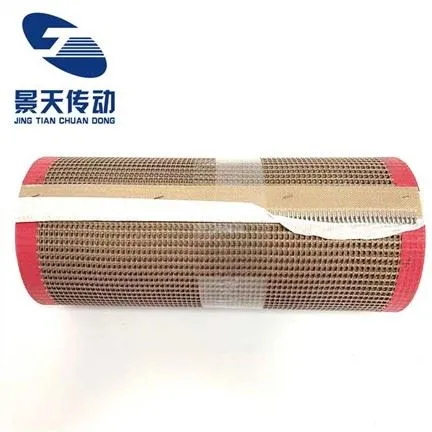
So, if you need a conveyor belt for a high-temperature environment, what are your options? There are a few alternatives that offer better heat resistance than Red PVC Conveyor Belts. One option is the Teflon Coated Fiberglass Conveyor Belt. Teflon, also known as polytetrafluoroethylene (PTFE), is a highly heat-resistant material. Fiberglass is also known for its excellent heat resistance and strength. When combined, these two materials create a conveyor belt that can withstand temperatures up to 260 degrees Celsius (500 degrees Fahrenheit) or even higher, depending on the specific product.
Another option is the Heat Resistant Silicone Conveyor Belt. Silicone is a synthetic rubber that has excellent heat resistance, flexibility, and chemical resistance. Heat-resistant silicone conveyor belts can typically handle temperatures up to 200 - 230 degrees Celsius (392 - 446 degrees Fahrenheit). They're also food-safe, making them a popular choice for the food and beverage industry.
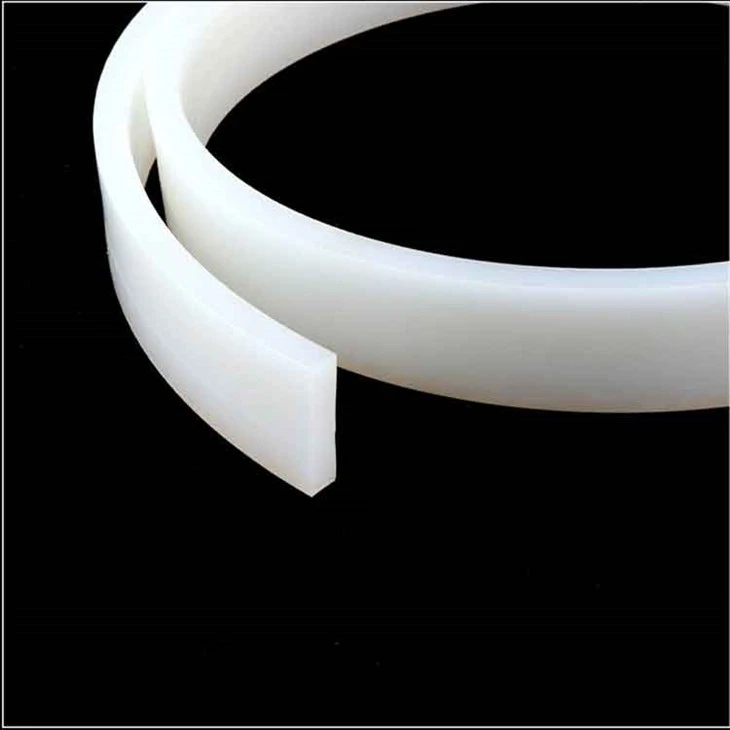
In addition to conveyor belts, there are other high-temperature resistant products that might be relevant to your operations. For example, the Silicone Oven Door Seal is a great solution for sealing ovens and other high-temperature equipment. Silicone oven door seals can withstand high temperatures and provide a tight seal, preventing heat loss and improving energy efficiency.

Now, let's talk about when you might still choose a Red PVC Conveyor Belt despite its limited heat resistance. If your application involves relatively low temperatures, such as in a packaging or light assembly line, a Red PVC Conveyor Belt could be a cost-effective and practical choice. They're easy to install, maintain, and replace, and they offer good performance in many non-high-temperature applications.
In conclusion, while Red PVC Conveyor Belts have some heat resistance, they're not the best option for high-temperature environments. If you need a conveyor belt that can handle extreme heat, you should consider alternatives like Teflon coated fiberglass or heat-resistant silicone conveyor belts. However, if your temperature requirements are within the range of what Red PVC Conveyor Belts can handle, they can be a reliable and affordable choice.
If you're in the market for a conveyor belt or other high-temperature resistant products, I'd love to have a chat with you. We can discuss your specific needs and find the best solution for your business. Whether you need a Red PVC Conveyor Belt for a low-temperature application or a more heat-resistant option for a high-temperature environment, we've got you covered.