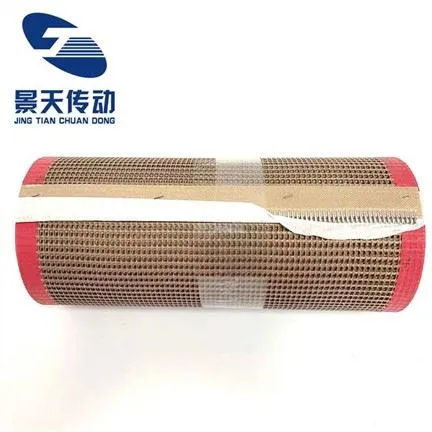
How long does a Glossy PVC Conveyor Belt usually last?
If you've ever worked in an industry that relies on smooth, consistent material transport-think food processing, packaging, light manufacturing, or even pharmaceutical production-you've probably crossed paths with a glossy PVC conveyor belt. As a supplier who's spent over a decade working directly with manufacturers to match them with the right conveying solutions, one of the most common questions I get asked is this exact one: How long will my glossy PVC belt actually last? The short answer is that it's not a fixed number, but depends heavily on how you use it, maintain it, and the environment it operates in. Let's break this down with the kind of real-world context I've learned from hundreds of customer interactions, so you can understand exactly what to expect.
First, let's start with the basics of what makes a glossy PVC conveyor belt different from other types. Glossy PVC belts get their smooth, shiny surface from a specialized finish applied during manufacturing, which is designed for low-friction material handling, easy cleaning, and consistent product contact. That finish is both a strength and a vulnerability-while it's ideal for tasks like moving packaged snacks, flat electronics, or precision components, it's also sensitive to certain conditions that can shorten its lifespan. Unlike high-temperature conveyor belts, which are built to withstand extreme heat for specialized tasks like baking or industrial drying, glossy PVC belts have a more narrow operating range, and that directly impacts how long they'll serve you. For comparison, if your operation regularly works with high temperatures, you might look at options like [Teflon Conveyor Belt High Temperature] or [High Temperature Silicone Conveyor Belt], but those are separate solutions for scenarios where PVC isn't suitable-our focus here is on standard glossy PVC, built for moderate environments.
Now, to the core question: typical lifespan. For most properly maintained glossy PVC conveyor belts in standard indoor environments (temperatures between 10°C to 50°C, low humidity, and no harsh chemicals), you can expect a range of 3 to 7 years. That's a broad window, and the difference between 3 and 7 years comes down to three key factors: load type, operating conditions, and maintenance. Let's dive into each one with examples from my own customer base.
Load type is the first big variable. If you're moving lightweight, flat products-like individual cookie sheets for a bakery, small boxes, or electronic parts-your glossy PVC belt will last closer to the 7-year mark. Those loads don't exert heavy, repeated pressure on the belt's structure, so the glossy surface doesn't wear down quickly. But if you're moving heavy, sharp, or abrasive items-like large metal parts, stacked heavy cartons, or materials with rough edges-your belt will wear faster. I had a customer in construction supply who used a glossy PVC belt to move heavy, gravel-filled bags; within 2.5 years, the glossy surface had scoured unevenly, leading to product misalignment. That's not a failure of the belt itself- it's a mismatch between load type and belt purpose. Another customer in snack packaging, moving single-serve chips in light plastic bags, has had the same belt running smoothly for 6 years with only minor surface scuffing, no impact on performance.
Next, operating conditions. This includes temperature, humidity, chemical exposure, and how the belt is used day-to-day. As I mentioned earlier, glossy PVC is not designed for high temperatures-if you operate it above 60°C, the plasticizer in the PVC starts to break down, which makes the belt brittle and causes the glossy surface to crack or fade. I once worked with a small manufacturer who tried to use a glossy PVC belt to move fresh out-of-oven bread; within a year, the belt had developed deep cracks and couldn't maintain a smooth surface, leading to bread sticking and jams. For high-temperature baking or drying applications, that customer ended up switching to [Cake Machine Silicone Conveyor Belt], which is built to handle sustained heat without degradation- a perfect example of matching the right belt to your environment. Humidity also plays a role: if your facility is consistently damp (like a seafood processing plant), PVC can absorb moisture over time, leading to the glossy surface losing its shine and becoming slightly sticky, which reduces its efficiency. Chemical exposure is another factor: if you use harsh cleaning agents, oil, or certain solvents on the belt, they can eat away at the PVC's surface, leading to premature wear.
The third, and most controllable, factor is maintenance. This is where the gap between 3 and 7 years really opens up. I've seen two identical belts running almost the same load and conditions-one that's maintained regularly, lasting 6.5 years, and one that's neglected, needing replacement at 2.5 years. What does consistent maintenance look like for glossy PVC belts? First, regular cleaning. Since the glossy surface is designed for easy cleaning, you can use mild soap and water to wipe down the belt daily, or a low-pressure steam clean weekly. The key is to avoid abrasive scrubbers or harsh chemicals that can scratch or etch the surface. Second, inspecting for small issues before they become big ones. Every month, check for small tears, frayed edges, or uneven wear along the belt. If you catch a small tear early, you can repair it with a PVC-specific adhesive or splice kit, rather than letting it grow and require full replacement. Third, maintaining proper tension. A belt that's too tight puts extra strain on the core structure, while a belt that's too loose can slip and cause uneven wear along the edges. Most modern conveyor systems have tension gauges, so checking that monthly takes just a few minutes and can add years to your belt's life.
It's also important to note that there are times when a glossy PVC belt will need replacing even before the 3-year mark, and those are usually avoidable. For example, if your operation uses sharp tools near the conveyor, or if product starts falling onto the belt and being dragged by the rollers, that's a quick way to damage the glossy surface. Another common issue is misalignment of the conveyor system itself-if the belt is running off-center, it will rub against the side guards every rotation, leading to uneven edge wear that makes the belt unusable long before its time.
Now, let's address a common misconception: some customers think that because the glossy surface is shiny, it's a delicate material that can't handle any wear. That's not true-glossy PVC is durable, but it's built for specific tasks. If you're working with food and need a belt that's easy to sanitize, glossy PVC is a great choice, as long as you follow the temperature and load guidelines. For food processing that involves higher temperatures, like baking or frying, a [Ptfe Food Conveyor Belt] might be a better fit, as it's more heat-resistant and still easy to clean for food safety.
As a supplier, my goal isn't just to sell you a glossy PVC conveyor belt-it's to help you get the longest possible lifespan out of it, because that saves you money in the long run. I always start by asking customers about their load type, operating environment, and maintenance practices, because that gives us a clear picture of how long their belt will last. For example, a customer in pharmaceutical packaging, moving lightweight tablets in temperature-controlled rooms, can expect their glossy PVC belt to last 6-7 years with minimal maintenance. A customer in outdoor produce sorting, working in moderate temperatures but with occasional exposure to mild cleaning chemicals, might be looking at 3-4 years.
The key takeaway here is that the lifespan of a glossy PVC conveyor belt is not a fixed number-it's a calculation based on how you use and care for it. By matching the belt to your specific load and environment, staying on top of regular maintenance, and addressing small issues early, you can maximize the time between belt replacements, reducing downtime and costs for your operation. If you're not sure whether a glossy PVC belt is right for your application, or if you have questions about extending the lifespan of your current conveyor belt, feel free to reach out to discuss your needs.