

If you've ever stood in a busy manufacturing, food processing, or packaging facility, you've probably noticed the quiet workhorses moving products along production lines: conveyor belts. Not all conveyor belts are created equal, though, and one of the most common questions I get as a glossy PVC conveyor belt supplier is: "What's the tear strength of a glossy PVC conveyor belt?" It's a loaded question, because tear strength isn't a one-size-fits-all number-it depends on how the belt is made, what it's designed to handle, and even the environment it operates in. Today, I want to break down what tear strength actually means for our glossy PVC belts, how it stacks up against other belt types, and why that matters for your operations.
First, let's get the basics out of the way. Tear strength (often referred to as tear resistance) is a material's ability to resist being pulled apart once a small rip or tear has started. Think of it like this: if a belt gets a tiny cut from a sharp edge, or a product snags on it, tear strength determines how far that tear will spread before the belt fails completely. For manufacturing and logistics teams, that number is non-negotiable-too low, and you're dealing with unplanned downtime, wasted product, and costly replacements. Too high, and you might be overspending on a belt that doesn't fit your needs.
Now, when it comes to glossy PVC conveyor belts, their tear strength isn't a fixed value. Most of our standard glossy PVC belts have a tear strength ranging from 30 to 50 kN/m (kilonewtons per meter). But that's a broad range, and it shifts based on three key factors: the belt's fabric core, the thickness of the PVC top cover, and any additives we include during manufacturing to enhance performance. Our belts, for example, use high-tensile polyester or nylon fabric cores-these are woven to distribute tension evenly across the belt, which directly boosts tear resistance. A thinner PVC cover (say, 1mm) will have lower tear strength than a thicker 3mm cover, which is common for applications handling heavier or sharper loads. We also add plasticizers and stabilizers to our PVC formula to balance flexibility and durability; without those, the belt would be too brittle and prone to tearing, especially in cool environments.
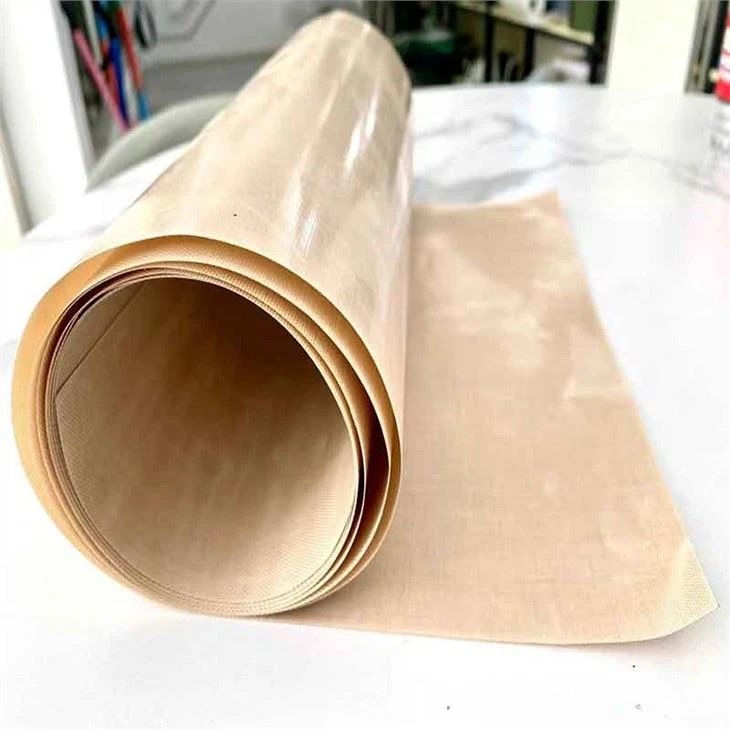
I should clarify that this is for standard glossy PVC belts designed for general-purpose use-things like moving packaged food, small parts, or boxes in warehouses. If you're working in a high-heat environment, though, you'll need to adjust your expectations. PVC starts to degrade at temperatures above 60°C (140°F), and as it breaks down, its tear strength drops sharply. That's why for high-temperature applications, we often recommend alternative belt options like High Temperature Silicone Conveyor Belt or Teflon Conveyor Belt. Silicone and Teflon (PTFE) belts hold up to temperatures well above 200°C, retaining their tear strength even in harsh thermal conditions. The Ptfe Conveyor Belt, for example, is ideal for applications like baking or heat-sealing, where glossy PVC would soften and tear within weeks.
Another thing to consider is how glossy PVC belts perform in wet or oily environments. The glossy top cover of our belts is non-porous, which makes them resistant to spills, moisture, and light oils-perfect for food and beverage processing, where easy cleaning is key. But if you're handling heavy, sharp materials like metal parts or construction debris, you might need a reinforced PVC belt with a higher tear strength. Our heavy-duty glossy PVC belts, used for automotive component assembly or shipping lines, have tear strengths up to 60 kN/m, which is well above the standard range. We also offer belts with cut-resistant edges for those extra-demanding tasks, so you don't have to worry about a small snag turning into a full tear mid-shift.
Let me share a quick story that drives this home. A few months back, we worked with a small bakery that was using a cheap glossy PVC belt for their cake production line. They were running it 12 hours a day, moving freshly baked sheets of cake from the oven to the cooling racks. Within a month, the belt was tearing along the edges-tear strength was so low that a sharp cake rack corner would puncture the PVC, and the tear would spread to 3 feet within a week. They tried patching it, but the patches only lasted a few days. Once they switched to a reinforced glossy PVC belt from our line, tailored to handle the mild heat and occasional oil from cake glazes, the tear strength was double what their old belt had been. Six months later, they haven't had a single tear-related downtime issue. That's exactly why matching tear strength to your application is so important.
I often get asked, "How do I calculate the tear strength I need for my line?" The answer isn't exact, but there are a few guidelines. First, consider the maximum load your belt will carry per square meter. For light loads (like packaged snacks or small electronics), a 30-35 kN/m tear strength is enough. For medium loads (like boxes, automotive parts), go for 40-50 kN/m. For heavy, sharp loads, aim for 55-60 kN/m. Second, think about your environment: if it's warm, add 10-15 kN/m to your target, and if it's wet or oily, stick to our standard glossy PVC's range since its non-porous cover handles those conditions well. If your line operates above 60°C, though, you'll need to look beyond PVC-something like the Heat Resistant Conveyor Belt we offer is engineered for sustained high temperatures and retains its tear strength better than PVC.
Another point to note is that glossy PVC belts have better tear strength than many other general-purpose belt materials, like standard rubber belts. Rubber belts tend to stretch more when under tension, which can make tears spread faster. Our glossy PVC belts have less stretch (usually less than 2% at maximum tension), so when a tear does occur, it doesn't have as much "give" to let the tear grow. That's a huge benefit for applications where downtime is costly-you can replace a torn section before it becomes a full belt failure.
But tear strength isn't the only factor. The "glossy" part of our belts matters too-wait, why is gloss important? For food processing, a smooth, glossy surface is easy to sanitize; there are no crevices for bacteria to hide, which is why many food regulators (like the FDA in the US) approve glossy PVC belts for direct food contact. For packaging, the glossy surface prevents products from sticking, so boxes or bags slide smoothly along the line without getting stuck, which reduces friction and also reduces the chance of snags that cause tears. For the cake manufacturer I mentioned earlier, the glossy surface was actually a secondary benefit-they had initially chosen a matte belt because they thought it was more durable, but it trapped crumbs and icing, leading to more cleaning and more wear. Switching to glossy not only solved the tear problem but also cut their cleaning time by half.
Let's compare a few common belt types to put glossy PVC's tear strength in context. Our standard glossy PVC is 30-50 kN/m. The Cake Machine Silicone Conveyor Belt, which we developed specifically for bakery lines, has a tear strength of 40-55 kN/m-slightly lower than our heavy-duty PVC, but designed to withstand higher temperatures. A standard rubber conveyor belt is usually 25-40 kN/m, so our glossy PVC is stronger for general use. The PTFE belts I mentioned earlier? Their tear strength is around 20-35 kN/m, but that's because they're designed for flexibility and non-stick properties, not heavy loads-so they're better suited for baking or heat sealing than for moving heavy boxes.

I've also seen a lot of customers make the mistake of overbuying a belt with too high a tear strength, thinking more is better. But that's like buying a truck to commute to work-you're paying for features you don't need, and the belt will be stiffer, harder to install, and more expensive. A 50 kN/m tear strength belt might cost 20% more than a 35 kN/m belt, and if you don't need that extra strength, you're wasting money every month. That's why as a supplier, I always ask customers about their application details: what are they moving? What's the temperature? How many hours a day does the line run? That way, I can recommend a glossy PVC belt with the exact tear strength they need, no more, no less.
If you're still unsure whether glossy PVC is right for your needs, or what tear strength range you require, I'm happy to walk through it with you. We've worked with hundreds of businesses, from small bakeries to large distribution centers, and we can help you test a sample belt to see how it performs in your specific environment. Whether you need a general-purpose glossy PVC belt for your packaging line, or a reinforced version for handling heavy loads, we have options tailored to your tear strength requirements.
Don't let unexpected downtime from belt tears slow down your operations. For all your conveyor belt needs, our team is here to help you find the perfect solution. Reach out to our sales team to discuss your project and get a customized quote.


