If you've ever stood at a factory floor watching products glide through production lines seamlessly, the guide conveyor belt is the unsung hero keeping that flow on track. As a supplier who's spent years working directly with manufacturers across food processing, packaging, automotive parts, and electronics, I can't tell you how often I get asked one core question: "What is the length range of guide conveyor belts?" It's not a trivial question-too short and you can't cover the full span of your production stage, too long and you risk sagging, misalignment, or inconsistent performance. Let's break this down, rooted in real-world use cases and industry standards I've witnessed firsthand, plus how our products fit into those needs.
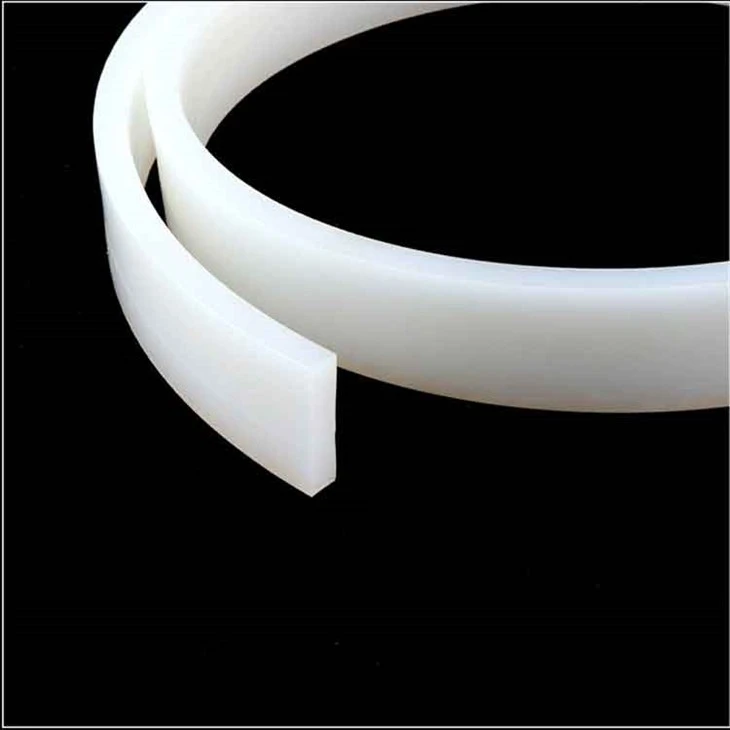
First, let's clarify what a guide conveyor belt is, for anyone new to the space. Unlike standard conveyor belts that only carry material, guide conveyor belts have built-in guide strips (or "edges") along their length that prevent lateral slippage. That makes them non-negotiable for processes where precise positioning is critical-like moving unbaked dough through sheeters, carrying baked goods through conveyor ovens, or transporting small electronic components that would fall off a flat belt. The length range isn't a one-size-fits-all number; it hinges entirely on the application, the equipment it's paired with, and the manufacturer's specific layout.
For most small-to-medium production lines-think artisanal bakeries, local packaging operations, or small electronics assembly shops-the sweet spot I see day-to-day is between 1 meter (about 3.28 feet) and 15 meters (49.2 feet). These are compact, versatile lines that don't need to span a large warehouse, and they benefit from guide belts that are easy to install, replace, and adjust. Take a small bakery running a batch cookie line: they'll often use a guide belt around 8 to 12 meters long to move cookies from the molder through the oven to the packaging station. Too short here, and you'd have to transfer the cookies manually mid-process; too long, and the belt would stretch unevenly under the weight of hot baked goods, leading to misalignment. That's where our heat-resistant options come in-we've supported countless bakeries looking for belts that hold their length and guide integrity at 180°C to 250°C, and our Heat Resistant Conveyor Belt line is built exactly for that consistent performance in medium-length runs.
Now, if you're working with large-scale industrial operations-think a global snack food manufacturer, an automotive parts plant, or a major electronics assembly facility-the length range shifts dramatically. These lines can span entire warehouse floors, often 20 meters (65.6 feet) up to 50 meters (164 feet), and in some specialized cases even longer. For example, a large potato chip factory might need a guide belt stretching 40 meters to move chips from the fryer through the seasoning and cooling stages, all while keeping the thin, fragile chips aligned to avoid breakage. The key here is that long guide belts need extra structural support-reinforced inner cores, high-tensile strength materials, and precision-molded guide strips that don't warp over hundreds of meters. I've worked with a few large plants that required custom belts over 50 meters for multi-stage assembly lines, though those are rare, and we always recommend consulting equipment specs because most standard conveyor systems are engineered to accommodate maximum belt lengths of around 50 meters to prevent sagging.
But wait-length isn't the only variable paired with the belt's purpose, and I've seen applications that fall outside these ranges for very specific reasons. Take the food industry, where processes like dough sheeting require ultra-precise, often shorter belts. A commercial dough sheeter, which rolls and shapes dough into consistent sheets for pizza, pastries, or bread, typically uses a guide belt between 0.5 meters (1.6 feet) and 3 meters (9.8 feet) long. Too long here, and the dough would stretch or slide unevenly during the sheeting process, ruining consistency. That's why our Dough Sheeter Belt line is purpose-built for these tight, high-precision applications-we manufacture them in exact lengths to fit the sheeter's roll dimensions, with guide strips that keep the dough centered without adding friction that would tear delicate dough.
On the flip side, there are specialty applications that push the upper limit of the range. For example, tunnel ovens used for large batches of baked goods or cured electronics might need guide belts that work in tandem with oven systems that extend 60 meters or more. These require heavy-duty guide belts with reinforced cores that resist stretching at sustained high temperatures, which is why our Ptfe Food Conveyor Belt and Teflon Conveyor Belt High Temperature lines are often chosen here. PTFE (Teflon) coatings are non-stick, heat-resistant, and have low friction, making them ideal for long runs where consistency over hundreds of feet matters. I recently supported a snack food client that upgraded from a standard guide belt that stretched 2 meters over a 40-meter run to a Teflon guide belt, cutting their downtime from misalignment by 70%-and that improvement directly tied to the belt's ability to hold its length and guide integrity over the entire span.
It's also important to note that when we talk about length ranges for guide conveyor belts, we're not talking about cutting a standard belt to size on-site (though some small operations do that). Most high-performance guide conveyor belts-especially those used in industrial or food-grade settings-are custom-cut to length from large rolls, with guide strips molded or attached at precise intervals. That's why knowing your production line's exact span, the load on the belt, and the operating environment is the first step to choosing the right belt length. For example, if you're running a line that moves heavy automotive components, a longer belt (25 to 40 meters) with a reinforced nylon or polyester core will hold up better than a shorter, thinner belt, as the core prevents stretching under heavy weight.
Another common question I get is: "Can guide conveyor belts be too short?" The answer is yes, for applications that require material to move through multiple stages without manual transfer. I once worked with a small packaging operation that initially bought a 2-meter guide belt for a line that required moving boxes from the seal stage to the palletizing stage-another 10 meters away. They had to hire two extra employees to carry boxes between stages, which doubled their labor costs. Switching to a 10-meter guide belt eliminated that labor gap, and the guide strips kept boxes aligned during the entire move, reducing the number of damaged packages. That's a perfect example of how getting the length range right impacts more than just the belt itself-it impacts efficiency, labor, and product quality.
If you're in the market for a guide conveyor belt, here's a quick rule of thumb I've developed over the years: start by measuring the exact distance between the two points your belt needs to connect (for example, dough sheeter exit to oven entrance, or fryer exit to cooling tunnel entrance). Then, add 5 to 10% extra length to that number. This extra length accommodates tension-conveyor belts need to be slightly tight to function, and a small buffer prevents you from having to re-cut the belt if installation tension is higher than expected. It also leaves room for minor adjustments if your production line's layout shifts over time, which is common as plants expand or reconfigure workflows.
For specialty applications, like high-heat baking lines or food processing, don't forget to pair length with material. A 15-meter heat-resistant guide belt made with PTFE is going to perform far better than a standard rubber belt of the same length in an oven that runs at 200°C. That's why our Silicone Oven Door Seal line is part of a holistic system we often recommend to bakeries and food manufacturers-while not a conveyor belt itself, these seals work with our heat-resistant guide belts to maintain consistent oven temperatures, which in turn preserves the belt's length and performance over time.
At the end of the day, the length range of guide conveyor belts isn't a rigid set of numbers-it's a flexible framework tailored to your unique operation. Most standard guide belts fall between 0.5 meters (for small sheeters or single-purpose tasks) and 50 meters (for large industrial lines), with custom options available for longer or more specialized needs. The key is to work with a supplier who understands both the technical specs and real-world use cases, to avoid overpaying for a belt that's too long or suffering downtime from one that's too short.
If you're looking to upgrade your production line with a guide conveyor belt, or just want to learn more about how the right length and material can improve your efficiency, don't hesitate to reach out. We've supported businesses from small local bakeries to large multinational manufacturers, and we can help you find the perfect solution for your specific needs.