If you've ever worked in industries like food processing, packaging, agriculture, or material handling, you know how tricky sticky materials can be. Whether it's fresh fruit pulp, wet clay, dough, or sticky chemical compounds, the last thing you want is your conveyor belt dragging, building up residue, or failing mid-shift. That's a question I hear all the time from clients who reach out to our Blue PVC Conveyor Belt line: Can these belts actually handle sticky materials? As a conveyor belt supplier with 12 years in the game, I've seen this exact debate play out in factories from small bakeries to large-scale food processing plants, so let's break this down clearly-no jargon, just real-world answers and practical insights.
First, let's get one thing straight: not all PVC conveyor belts are the same. Blue PVC is a specific formulation of polyvinyl chloride that's designed for durability, ease of cleaning, and resistance to oils, fats, and mild chemicals-traits that make it a popular choice for industries handling food, pharmaceuticals, and light manufacturing. When it comes to sticky materials, the performance of a Blue PVC belt hinges on two key factors: its surface properties and how the material interacts with that surface. PVC is a non-porous material, which is a big plus for sticky stuff, because porous belts (like some rubber or fabric belts) let sticky materials seep into their structure, making them nearly impossible to clean thoroughly. That residue can attract bacteria, cause cross-contamination in food settings, and shorten a belt's lifespan drastically. But here's the caveat: basic Blue PVC has a smooth, glossy surface, which actually works well for many sticky materials-wait, but why do some people say PVC belts get gummed up?
It boils down to the viscosity and temperature of the material you're conveying. If you're moving sticky, room-temperature materials like soft cookie dough, fresh tomato pulp, or wet grain slurry, a Blue PVC conveyor belt can work effectively, as long as you pair it with the right maintenance practices. The smooth, non-stick (well, low-stick, compared to other materials) surface of Blue PVC means most of the sticky material won't cling permanently-you can wipe it down with a mild detergent or a pressure washer during regular cleaning cycles, without the material embedding into the belt. I've seen this work for a client in the artisanal jam industry, who switched from generic rubber belts to our Blue PVC line and cut their weekly cleaning time by 70%, because strawberry and raspberry pulp just rinsed off instead of baking onto the belt's surface.
But here's where you need to know the limits. If your sticky material is highly viscous, hot, or has high sugar or fat content, basic Blue PVC might start to have issues. For example, molten chocolate or heavy, starch-based dough that's runny and hot can melt slightly onto the PVC surface, creating a sticky residue that's harder to remove over time. In those cases, Blue PVC isn't the right fit-and that's not a knock on PVC, it's about matching the belt to the job. This is where I always advise clients to assess their material's specific properties first: what's its temperature? How sticky is it at operational speed? Is it corrosive? That's why as a supplier, I don't just push a Blue PVC belt every time; I lay out options based on the exact application.
Now, let's address a common mistake people make: assuming all non-stick surfaces work for sticky materials. I've had clients tell me they tried a Teflon mesh conveyor belt because they heard it was non-stick, only to find that their sticky clay material seeped through the mesh, causing clogs. Wait, that's a key point-open-mesh belts like the Teflon mesh conveyor belt are great for applications that need airflow, like drying or cooling, but if you're moving thick, sticky, wet materials, the gaps in the mesh will let that material fall through or build up in the weave. It's not that the Teflon coating is bad, it's that the structure isn't right for sticky, dense materials.


So when is Blue PVC the right call for sticky materials, and when should you look elsewhere? Let's outline the scenarios where Blue PVC shines: for medium-viscosity, room-temperature to slightly warm sticky materials. Think things like soft cheese, fruit puree, wet grain, or mild adhesives used in packaging. Its resistance to oils and fats also makes it a top pick for bakeries handling sticky dough or frosting, because it won't absorb those ingredients. It's also easy to sanitize, which is non-negotiable for food and pharmaceutical industries, where cross-contamination is a major risk.
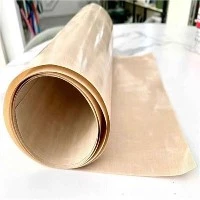
But for highly challenging sticky materials, there are alternatives that work better, and I always flag that to my clients. If you're handling hot, highly viscous sticky materials like molten caramel, sticky resins, or heavy food pastes, a solid Teflon conveyor belt (or a Teflon Ptfe coated fiberglass fabric conveyor belt) is a better choice. Teflon's pure non-stick surface stands up better to high temperatures and prevents even the stickiest materials from bonding to the belt, as long as the belt is solid (not mesh). For heavy-duty industrial sticky materials, like wet metal fines or dense clay, a stainless steel wire belt is another option-its open structure is actually good for preventing material buildup, and it's durable enough for high-heat, heavy-load applications. I once had a client in a ceramics factory who was using regular rubber belts for their wet clay, which kept sticking and tearing; switching to stainless steel wire belts eliminated that issue entirely, even with their thick, sticky clay slurry.
Another common question I get: can Blue PVC be modified to work with stickier materials? The short answer is yes, but with limits. We can treat Blue PVC belts with a specialized coating to make their surface even more resistant to adhesion, which works well for materials like mild dough or fruit pulp. But for extremely sticky, hot materials, even a coated Blue PVC belt won't hold up as long as a Teflon-based option. That's why part of my job as a supplier is walking clients through these nuances-no one wants to invest in a belt that will need replacing in three months because it can't handle their material.
Maintenance is also a big part of making Blue PVC work for sticky materials. Even the best belt will fail prematurely if you don't clean it regularly. For sticky materials, I recommend a two-step cleaning process: first, use a soft brush or low-pressure washer to remove loose material before it dries, then wipe the belt with a mild, food-safe detergent (for food-grade applications) to break down any remaining residue. For heavier buildup, we offer specialized cleaners designed specifically for Blue PVC belts that don't damage the surface. I always remind clients that the longer sticky material sits on the belt, the harder it is to remove, so a consistent cleaning schedule is key.
Let's also talk about what makes our Blue PVC conveyor belt different from other brands on the market. We source our PVC from high-quality, food-grade (or industrial-grade, depending on the application) formulations that are specifically engineered for low surface adhesion, not just general durability. We also offer custom widths, thicknesses, and ply counts, so you can get a belt that fits your exact conveyor system, which is crucial for preventing gaps or misalignments that can cause sticky material to build up. Many of our clients come to us after having bad experiences with generic PVC belts that were too thin or had a poor surface finish, so we prioritize that balance of strength and low-stick properties.
I've seen firsthand how the wrong belt for sticky materials can cost a factory thousands of dollars in downtime, cleaning labor, and belt replacements. A few years back, a small confectionery client reached out to us after their old rubber belt kept sticking to their gummy candy, causing jams that shut down their production line three times a week. They switched to our Blue PVC conveyor belt, and in the first month, their jam-related downtime dropped to zero. That's the kind of real impact that comes from matching the right belt to the right material.
That said, it's important to be transparent about when Blue PVC isn't the solution. If your sticky material has a temperature above 180°F (82°C), PVC starts to soften and lose its structural integrity, so a Teflon-based belt is a better pick. If your material is highly abrasive and sticky (like wet metal ore mixed with sand), stainless steel wire belts will hold up longer than PVC, which can scuff or wear down faster. And if you need a belt for applications that require drying (like sticky wet produce that needs air circulation), a mesh belt isn't right for PVC, so you'd want to go with something like the Teflon mesh conveyor belt I mentioned earlier, but that's not a PVC option.
At the end of the day, the question "Can Blue PVC conveyor belt be used for conveying sticky materials?" doesn't have a one-word answer-it depends on your specific application. Blue PVC works exceptionally well for many common sticky materials, especially in food processing, packaging, and light manufacturing, thanks to its smooth, non-porous surface and easy cleanability. But it's not a one-size-fits-all solution, and that's why I always work closely with clients to assess their material's temperature, viscosity, and operational needs before recommending a belt.
If you're working with sticky materials and aren't sure which conveyor belt is right for your operation, don't guess-reach out to us. We've helped hundreds of businesses solve material handling issues with tailored belt solutions, and we're happy to walk you through the pros and cons of Blue PVC, Teflon options like the Teflon conveyor belt, Teflon Ptfe coated fiberglass fabric conveyor belt, stainless steel wire belts, Ptfe seamless fusing machine belts, or the Teflon mesh conveyor belt, whichever fits your needs best. No pressure, no sales pitch-just honest advice from someone who's been in this industry long enough to know what works (and what doesn't) for sticky, tricky materials.