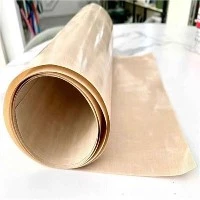
If you've ever walked through a food processing plant, a bakery, or a packaging facility, you've likely spotted white PVC conveyor belts. They're the workhorses of countless operations, valued for their smooth surface, ease of cleaning, and cost-effectiveness. But one question I get asked all the time-by plant managers, maintenance teams, and even fellow suppliers-is this: Can white PVC conveyor belts handle inclined conveying?
As someone who's been in the conveyor belt business for over a decade, I've seen this debate play out in production rooms and trade show booths alike. Some swear by PVC for uphill runs, while others warn it's too slippery for anything steeper than a flat line. The truth isn't a simple yes or no-it depends on the application, the load, and how you set up the belt. Let's break this down, drawing on real-world testing, on-the-job experience, and what our customers have taught us over thousands of installations.
First, let's get a quick primer on white PVC conveyor belts. Unlike other colored PVC belts (often blue for chemical resistance or black for industrial strength), white PVC is formulated to meet strict food-grade standards. That means it's free of harmful additives, resistant to most oils and fats, and easy to sanitize-perfect for industries like baking, confectionery, and fresh produce handling. It's also lighter than rubber belts, which can be a plus for energy efficiency, but that same lightness and smooth surface are part of why the inclined conveyor question comes up.
The biggest factor in whether a belt works for incline conveying is friction. If the belt and the product slide backward as it moves uphill, you've got a problem. For horizontal runs, PVC's smoothness is a benefit-prevents product damage, makes cleaning a breeze. But for inclines, that smoothness can be a downside… unless you modify it. That's where belt profiling comes in.
We've had customers install white PVC belts with chevron patterns, cleats, or sidewalls for inclined runs up to 25 degrees. A bakery client in Ohio uses cleated white PVC belts to move dough pieces from the preparation table up to a proofing rack. The cleats are just 1 inch high, spaced every 12 inches, and they catch the dough without crushing it-something a plain belt would never do. Without those cleats, the soft, freshly shaped dough would slide right back down the incline when the belt starts moving. Another customer, a fruit processing plant in Florida, uses chevron-patterned white PVC to move washed strawberries up a 20-degree slope to a packing line. The chevrons add enough friction to keep the berries from rolling backward, while still letting water and debris drain through the gaps between the patterns.
But here's the catch: not all white PVC is the same. Some low-cost imports are made with thin, soft PVC that doesn't hold its shape well. A customer in Texas once tried a cheap, unprofiled white PVC belt for a 15-degree incline carrying cereal flakes, and within a week, the flakes were sliding so much that half the production was ending up on the floor. We replaced it with a thicker, reinforced white PVC belt and added custom cleats, and the problem was solved. Reinforcement is key here-white PVC belts for inclined conveying need to have a polyester or nylon ply to prevent stretching. A stretched belt won't stay aligned, and the profiling will start to wear unevenly, leading to more slippage.
Another common mistake we see is not accounting for product weight and texture. If you're moving heavy, dense items like canned goods, plain white PVC might work for gentle inclines (up to 10 degrees) because the weight creates enough contact friction. But for light, smooth items like cookies or candies, even a 10-degree incline can cause them to slide. In those cases, you need that additional profiling. We also have to consider the environment-if the incline is in a moist area, like a washdown zone, PVC's water resistance works for it, but the wet surface can reduce friction. So in high-moisture inclines, we recommend slightly taller cleats or a rougher finish on the belt surface.
Now, let's talk about what white PVC isn't good for. If your incline is steeper than 25 degrees, plain or even profiled white PVC might not be enough. That's where other belt materials come in. For steep inclines (30+ degrees), many of our customers move to materials with higher friction, like silicone conveyor belts, or even alternative options. For example, if you're working with high-temperature products, a Teflon Conveyor Belt High Temperature might be a better fit, as it can handle heat that PVC would melt at. If food safety is your top priority and you need high heat resistance, a Ptfe Food Conveyor Belt could be the way to go, though it's worth noting PTFE is more flexible than PVC for profiling.


We also see a lot of confusion when it comes to specialty food processing equipment. For instance, a bakery using a Dough Sheeter Belt might not realize that those belts are designed for horizontal sheeting, not inclined conveying. If you try to use a dough sheeter belt on an incline, the thin material and lack of profiling will lead to dough slippage. That's why it's important to match the belt type to your specific application, not just the industry.
Another consideration for inclined conveying is the conveyor itself. The pulley size and tension settings matter just as much as the belt. If your conveyor has too much slack, the belt will flex on the incline, reducing contact with the product and increasing slippage. We always work with our customers to set the right tension-too tight, and you'll wear out the belt prematurely; too loose, and you'll get slippage and misalignment. Also, the side of the conveyor frames-if they're too low, product can fall off the sides, especially on steeper inclines. That's why adding sidewalls to the white PVC belt is often a good idea for inclines over 15 degrees.
Let's get back to real-world results. Last year, we installed a system for a confectionery company in Pennsylvania that moves chocolate-coated candies up a 22-degree incline to a cooling tunnel. We used a reinforced white PVC belt with small, rounded cleats (to avoid scratching the chocolate) and sidewalls along the edges. The customer was worried the candy would slide or get damaged, but after three months of running 24/7, there's almost no product loss. The white PVC is easy to sanitize between production runs, which is critical for their food safety standards, and the cleats have held up without wearing down.
But not every inclined run is a fit for white PVC. For example, if you're moving very hot materials-like fresh-baked bread straight from an oven-white PVC can't handle temperatures over 140°F, so it will warp. In that case, a silicone belt or Teflon belt is a better choice. We recently supplied a Silicone Oven Door Seal for a client, but for their inclined oven conveyor, they went with a Teflon belt because of the high heat. Another example: if you're working with very sharp or abrasive materials, white PVC's smooth surface can be scuffed easily, so a harder material like a Stainless Steel Wire Belt would be more durable.
So, to circle back to the original question: Can white PVC conveyor belts be used for inclined conveying? The short answer is yes-if you do it right. The key steps are: choose a reinforced, food-grade white PVC belt, add profiling (cleats, chevrons, or sidewalls) based on your incline angle and product type, set the correct conveyor tension, and adjust for environmental factors like moisture. The maximum incline we've seen white PVC work for is 25 degrees, with heavy, dense products at the lower end of that range and light, profiled products at the higher end.
If you're not sure whether white PVC is right for your inclined conveying application, don't guess-talk to a specialist. We've helped hundreds of customers design conveyor systems that save them money, reduce product loss, and meet safety standards. Every operation is different, and what works for one bakery might not work for a fruit processing plant. The good news is that white PVC is a versatile option when paired with the right modifications, and it's often more cost-effective than alternative belt materials for many incline applications.
At the end of the day, the best conveyor belt for inclined conveying is the one that balances performance, safety, and cost. White PVC checks a lot of boxes for food and light industrial operations, as long as you account for friction, profiling, and reinforcement. If you're looking to upgrade your inclined conveyor system or have questions about white PVC belts, feel free to reach out to us for a consultation. We can help you pick the right belt type, profile, and setup to meet your specific needs.
For more information on conveyor belt solutions for various applications, including high-temperature and food-grade options, explore our product offerings designed to support efficient, safe processing.