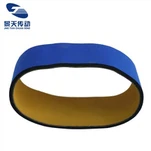
1. Preparation: Disconnect the power supply and lock/tag the belt to ensure it is stopped.
Prepare a dedicated wrench, tensioning tool, laser thermometer, etc., and check if the new conveyor belt specifications match.
2. Old Conveyor Belt Removal: Loosen the tensioning device to release tension and mark the running direction (if directional requirements exist).
Use tools to peel the conveyor belt from the rollers, dismantle it in sections, and protect the rollers and frame.
3. New Conveyor Belt Installation:
Clean the rollers and idlers, and lay the new conveyor belt according to the marked direction.
Use a butt welding tool to connect the two ends (thermal fusion or mechanical connection), and gradually tension it to the appropriate tension (usually 12% elongation).
4. Debugging and Inspection:
Run the conveyor belt under no-load to observe for deviation and adjust the roller position.
Conduct a load test to monitor motor current and temperature rise, and verify the joint strength.
Precautions:
Safe Operation: Power off throughout the process to avoid mechanical injury.
Directionality: Ensure the working rubber surface (thicker side) faces outwards.
Joint Treatment: Control the temperature (140-160℃) and pressure (0.8-1.2MPa) during hot vulcanization; reduce parameters for thin strips.