1. Matching Load Requirements
Light Load (<500kg/m): Choose a PVC belt with a thickness of 7.5-10mm to avoid insufficient flexibility due to excessive thickness.
Medium Load (500-2000kg/m): Requires a thickness of 10-20mm, and checks impact resistance, such as Jiashuo Rubber EP400 polyester belt (30 RMB/meter).
Heavy Load (>2000kg/m): Prioritize a thickness of 20mm or more, such as Shuangxiong Tengda heat-resistant and wear-resistant belt (88 RMB/meter), to avoid breakage due to insufficient strength.
2. Raw Material Selection
Resin: Select a high degree of polymerization and low impurity resin (such as PVC-M) to ensure basic strength.
Stabilizer: Calcium/zinc composite stabilizer or organotin to prevent thermal degradation.
Filler: Control the amount of calcium carbonate added (≤8%) to avoid increased brittleness.
3. Pattern Type Compatibility
Flat Pattern: Suitable for dry environments, such as Xizan green flat belt (20 RMB/meter).
Diamond/Lawn Pattern: Highly slip-resistant, used for incline or inclined conveying, such as XMSJ lawn pattern belt (10 RMB/meter).
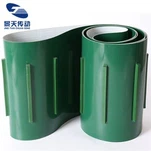
Sidewall/Skirt: Prevents material spillage, such as Qihang corrugated sidewall belt, suitable for bulk material transportation.
4. Certification Standard Assessment
Food Grade: Requires FDA certification, such as Huanqiu oil-resistant food-grade belt (8 RMB/meter).
Antistatic: Suitable for electronics workshops, such as OEING antistatic custom belt (397 RMB).
Flame Retardant/High Temperature Resistant: Requires compliance with MSHA standards in mining, such as Kangjian high temperature resistant belt (65 RMB/meter).