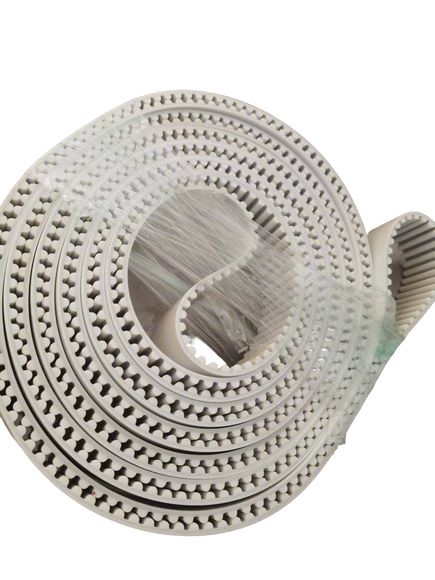
1. Storage environment control
Keep dry: Store PU conveyor belts in a dry environment, ensure good ventilation, and avoid damp or waterlogged places.
Avoid direct sunlight: Ultraviolet rays will accelerate the aging of PU materials, causing them to become brittle and harden, affecting the performance and service life of the conveyor belt. Therefore, PU conveyor belts should avoid being exposed to sunlight for a long time.
Suitable temperature: The ideal storage temperature is room temperature (15℃ to 25℃). Avoid storing in an environment with too high (over 40℃) or too low (below -10℃) temperature.
2. Storage method
Avoid direct contact with the ground: Use a bracket or tray to raise the PU conveyor belt to avoid direct contact with the ground, ensure a clean storage environment, and avoid dust, dirt and other pollutants from contacting the conveyor belt surface.
Avoid heavy objects: Heavy objects should not be pressed on the PU conveyor belt during storage, otherwise it may cause the conveyor belt to deform, wrinkle, and even affect the performance of the belt body.
Flat storage: The PU conveyor belt should be kept as flat as possible during storage to avoid curling or folding. Excessive bending or winding can cause permanent deformation of the conveyor belt surface, affecting subsequent use.
3. Cleaning and maintenance
Regular cleaning: Clean the conveyor belt surface regularly to remove dust, dirt and residue. Avoid using corrosive cleaning agents to avoid damaging the PU material.
Repair damage in time: If wear, cracks or scratches are found on the conveyor belt surface, they should be repaired in time to prevent the damage from expanding.
Avoid pollution: Prevent chemicals, grease and other contaminants from contacting the synchronous belt to avoid accelerating the aging process.
4. Use and operation
Avoid starting with load: When starting the conveyor belt, avoid starting with load to reduce the impact on the conveyor belt.
Control the working environment: Control the working environment of the conveyor belt as much as possible, such as avoiding excessive temperature and humidity.
Regular inspection and maintenance: Check the operating status of the conveyor belt regularly to find and solve problems in time, such as deviation and slack.