As a reliable supplier of food grade conveyor belts, I frequently encounter customers who are unsure about accurately measuring the length of their conveyor belts. Precise measurement is crucial not only for ensuring the proper functioning of the conveyor system but also for ordering the correct replacement belt. In this blog post, I'll walk you through the key steps and methods to measure the length of a food grade conveyor belt effectively.
Understanding the Importance of Accurate Measurements
Before we dive into the measurement process, let's take a moment to understand why getting the length right is so important. A conveyor belt that is too short won't fit properly around the pulleys, leading to slippage, misalignment, and premature wear. On the other hand, an overly long belt can cause slack, which also results in inefficiencies and potential damage to the belt and the conveyor system.
In the food industry, where hygiene and precision are of utmost importance, a well - fitting conveyor belt is essential for maintaining a smooth and safe production process. It ensures that food products are transported consistently, reducing the risk of contamination and product loss.
Types of Food Grade Conveyor Belts
There are several types of food grade conveyor belts available, each with its own unique properties and applications. Some of the common ones include:
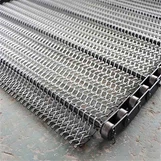
- Stainless Steel Wire Belt: Ideal for high - temperature applications and processes that require good air circulation. You can learn more about it here.
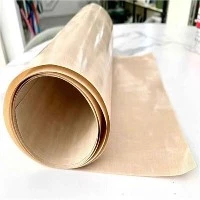
- Teflon Mesh Conveyor Belt: Known for its non - stick surface and excellent heat resistance, it is often used in baking and cooking processes. Check out the details here.
- Heat Resistant Conveyor Belt: Specifically designed to withstand high temperatures, these belts are suitable for processes like roasting and drying. Find more information on this page.
- PTFE Mesh Conveyor Belt: With high - temperature resistance and a flat surface, it is commonly used in applications where the food needs to be evenly heated or cooled. You can explore the product here.
- Ptfe Mesh Conveyor Belt: Similar to the PTFE mesh belt, it offers great performance in terms of heat resistance and non - stick properties. Read more about it here.
Methods for Measuring the Conveyor Belt Length
Method 1: Measuring an Existing Belt
If you have an existing belt that needs to be replaced, the simplest way is to measure the length directly. You'll need a flexible measuring tape.
- For a Single - Belt System:
- First, carefully remove the belt from the conveyor system. Make sure to do this in a safe and proper manner, following all relevant safety procedures.
- Lay the belt flat on a clean and smooth surface. Avoid any creases or folds.
- Start at one end of the belt and use the measuring tape to measure along the entire length of the belt, following the centerline of the belt if possible. Record the measurement in the appropriate units (usually inches or millimeters).
- For a Belt with a Complex Shape:
- In some cases, the belt may have curves, turns, or special shapes. When measuring, you may need to follow the contour of the belt as closely as possible. You can use a flexible measuring tape that can bend around the curves.
- If the belt has multiple sections or splices, make sure to measure the entire length, including all the sections and accounting for the splice lengths.
Method 2: Measuring the Conveyor System to Calculate Belt Length
If you don't have the existing belt available or if it is difficult to remove, you can measure the conveyor system itself to calculate the belt length.


- Identify the Pulleys:
- Locate all the pulleys in the conveyor system, including drive pulleys, idler pulleys, and any tensioning pulleys.
- Measure the diameter of each pulley. You can use a caliper for accurate measurement or a measuring tape to measure the circumference and then calculate the diameter (using the formula (d = \frac{C}{\pi}), where (d) is the diameter and (C) is the circumference).
- Measure the Center - to - Center Distance:
- Measure the distance between the centers of the drive pulley and the idler pulley. This is an important parameter in the belt length calculation.
- In a conveyor system with multiple pulleys, you may need to calculate the distances between key pulley pairs. For example, if there are tensioning pulleys, measure the distances from the main pulleys to the tensioning pulleys as well.
- Use the Belt Length Formula:
- For a simple two - pulley conveyor system, the approximate belt length formula is (L = 2C+\frac{\pi}{2}(D + d)+\frac{(D - d)^2}{4C}), where (L) is the belt length, (C) is the center - to - center distance between the two pulleys, (D) is the diameter of the larger pulley, and (d) is the diameter of the smaller pulley.
- In more complex conveyor systems with multiple pulleys, the calculation may be more involved. You may need to break the system down into smaller sections and calculate the length of each section separately and then sum them up.
Method 3: Using a Belt Measuring Tool
There are also specialized belt measuring tools available in the market. These tools are designed to measure the length of the conveyor belt more accurately, especially for belts that are in use and difficult to remove.
- Some belt measuring tools work by rolling along the surface of the belt and measuring the distance traveled. They are often equipped with a digital display that shows the measured length.
- When using a belt measuring tool, make sure to follow the manufacturer's instructions carefully to get an accurate measurement.
Double - Checking and Taking Precautions
After obtaining the measurement, it is always a good idea to double - check. You can use a different method or measuring tool to confirm the accuracy. Additionally, consider the following precautions:
- Account for Expansion and Contraction: Food grade conveyor belts may expand or contract due to temperature changes, especially in high - temperature or cold - storage applications. Make sure to factor in an appropriate allowance for expansion and contraction when ordering a new belt.
- Check for Wear and Tear: If you are measuring an existing belt, check for signs of wear and tear. Excessive wear may affect the accuracy of the measurement. If the belt is significantly worn, it may be a good idea to measure the pulley system and calculate the new belt length to ensure a proper fit.
Conclusion
Accurately measuring the length of a food grade conveyor belt is a crucial step in maintaining a well - functioning conveyor system. Whether you choose to measure the existing belt directly, calculate the length based on the conveyor system components, or use a specialized measuring tool, it is important to follow the proper procedures and take precautions to ensure accuracy.
As a trusted supplier of food grade conveyor belts, I am committed to providing high - quality products and expert advice. If you have any questions about measuring your conveyor belt or need assistance in selecting the right belt for your application, please don't hesitate to contact me. We look forward to discussing your requirements and helping you find the perfect conveyor belt solution.