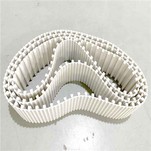
1. Heat sealing treatment
Necessity: After punching holes, the edges of the holes must be heat-sealed to prevent the service life of the conveyor belt from being affected by edge damage or tearing.
Method: Use professional hot pressing equipment to heat-seal the edges of the holes to ensure the long-term stability of the edges of the holes.
2. Hole design
Hole selection: The size, shape and distribution of the holes need to be tailored to the specific application scenario. Common hole types include round, square and rectangular, and the density of the holes depends on the air circulation requirements or moisture discharge efficiency.
Aperture and density: The size and density of the holes need to be precisely defined according to the material properties. Too large or too dense holes may weaken the strength of the belt body, while too small holes cannot meet the ventilation or drainage requirements.
3. Hole position design
Reasonableness: The location of the holes should avoid being concentrated in the weak areas of the conveyor belt to prevent structural damage or premature wear. The evenly distributed hole position design ensures the stability of the load.
4. Cleaning and maintenance
Regular inspection: Regularly check whether the hole channel is unobstructed and remove blockages.
Cleaning method: Use neutral detergent to clean the perforated area and avoid using corrosive chemicals.
5. Other precautions
Environmental adaptability: Ensure that the perforated PU conveyor belt is suitable for its working environment, such as high temperature, humidity or chemical corrosion environment.
Testing and evaluation: The perforated conveyor belt needs to be tested for durability, load-bearing capacity and actual operating environment to ensure that its performance meets production requirements.