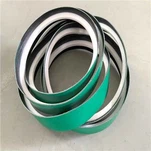
1. Check the operating status:
Slippage: Under load, the motor current spikes, the conveyor belt speed drops significantly, and even a "free-running friction" noise occurs.
Belt misalignment: The conveyor belt edge rubs against the frame, making a "rustling" sound, or it deviates significantly from the center line.
Abnormal vibration: Loud noise and slight frame vibration under load may indicate excessive or insufficient tension.
2. Measure physical parameters:
Pressure test: After stopping the machine, apply approximately 50N of pressure (equivalent to the weight of a 5kg object) to the midpoint of the belt between the two rollers. A settlement of 10-20mm is ideal. Excessive settlement (>20mm) indicates the belt is too loose, while insufficient settlement (<10mm) indicates it is too tight.
Tension gauge measurement: Use a professional tool (such as a tension gauge) to measure the actual tension and calibrate it against the manufacturer's recommended value.
3. Listen to the sound and observe the marks
Listen to the sound: Slippage usually produces a "squeaking" or "tapping" sound.
Observe the marks: Misalignment will cause one side of the belt to become shiny or scratched; slippage will leave shiny abrasion marks or rubber powder adhering to the toothed working surface.
4. Regular inspection
Even if the belt is running normally, it is recommended to conduct a routine inspection once a month, focusing on checking for signs of aging such as cracks, delamination, and edge wear, and adjusting or replacing it in a timely manner.