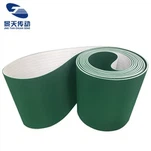
1. The tension of the conveyor belt is too tight
The indicator of whether the tension is adjusted in place is that the conveyor belt can operate normally after installation without slipping or deviation. If the tension is too tight, long-term operation will cause deformation of the skeleton layer, and the entire conveyor belt will be deformed, thus affecting its use.
2. Influence of the use environment
The conveyor belt is a washable conveyor belt, but it is not suitable for long-term immersion in water, which can easily lead to accelerated aging of the conveyor belt.
The conveyor belt is suitable for contact with large molecular oils, such as vegetable oils, animal fats, etc., and small molecular oils, such as olive oil, etc., will penetrate into the belt after long-term use, causing expansion, thereby causing cracking and aging of the conveyor belt.
3. Human factors
The main cause of excessive tension in the conveyor belt is human factors. Although the conveyor belt is a cut-resistant belt, it cannot withstand the damage of sharp objects. The thinner the conveyor belt, the more it can only play a conveying role, and it cannot reach the level of cut resistance.
4. Influence of joints
The tensile strength of the joint is about 80% of the belt body, and the double-layer toothed belt can reach 85%. If the tension of the conveyor belt is too tight, the weight of the conveyed object exceeds the bearing range of the belt body, the running speed is too fast, etc., the joint will tear.