I. Pre-installation Preparation
1. Safety Verification: Disconnect the power supply to the equipment and confirm that the entire machine is in a stopped and locked state to avoid accidental start-up and potential safety accidents.
2. Material Verification: Verify that the conveyor belt model and width match the equipment parameters, and check that the belt body is free of cracks, scratches, or other defects.
3. Foundation Verification: Confirm that the concrete foundation strength meets the standards, the horizontal error of the embedded plate is ≤2mm/m, and clean up debris at the installation site.
4. Tool Preparation: Prepare wrenches, levels, tension gauges, and special lubricants for the corresponding working conditions.
II. Core Installation Steps
1. Frame Positioning and Installation: Using the laser-projected reference center line, hoist the frame in sections, ensuring the overall center line deviation is ≤2mm. Adjust the frame tilt angle deviation to within ±0.5°, and tighten the anchor bolts to complete the fixation. 2. Roller and Idler Installation: The horizontal error of the drive and idler roller axes should be ≤0.5mm/m, and the coaxiality deviation ≤0.15mm. Idler rollers should be installed at standard intervals, with a spacing of 1-1.5m in regular sections. Buffer idlers should be added at material drop points.
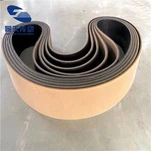
3. Conveyor Belt Laying and Positioning: The belt should be gradually fitted onto the driven roller starting from the drive roller, avoiding twisting and folding throughout the process. The belt bending radius should be ≥20 times the belt width to prevent damage to the belt core.
4. Jointing and Tensioning Adjustment: Joints should be made using a hot vulcanization process, ensuring the joint strength reaches over 90% of the belt body's strength. Adjust the tensioning device, leaving a 1/3 stroke allowance. The appropriate tension is achieved when pressing down 20-30mm on the middle of the belt with a finger.
5. No-Load Test Run: After powering on, run the belt under no-load for 3-5 minutes, observing the belt's running status. Fine-tune the tensioning pulley to eliminate abnormalities such as belt misalignment and unusual noises.
III. Key Precautions
1. Damage Prevention: Do not pry the belt with sharp tools. Before installation, grind burrs off the roller surface (grit size ≥ 120 mesh) to avoid scratching the belt surface.
2. Daily Maintenance Requirements: Add approximately 5g of high-temperature lithium-based grease to the bearings monthly. Inspect the joints weekly; if cracks are found, stop the machine immediately for repair.
3. Operating Condition Adaptability Requirements: The normal operating environment temperature should be controlled between 0-50℃. Only neutral detergents should be used to clean the belt; strong acids and alkalis must be avoided to prevent corrosion.
4. Compliance Verification Requirements: The entire installation process must comply with the relevant specifications of the "Engineering Technical Standard for Belt Conveyors" (GB50431-2020) to ensure that the installation quality meets the standards.