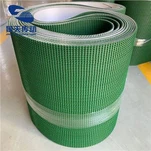
Most of the rubber synchronous belts are made of neoprene imported from Japan as the main raw material, and are made of different accessories according to the product use. The skeleton material is also made of glass fiber rope imported from Japan. The strength layer of glass fiber is a rope made of multiple strands of glass fiber spirally wound along the width of the tape at the node position. It has the advantages of high strength, low elongation, corrosion resistance, heat resistance, etc., and then the neoprene tape back is firmly bonded to the node line position through the glass fiber. In a word, it is strong and durable!
Polyurethane timing belt, also known as PU timing belt, is also a very common material, most of which are composed of thermoplastic polyurethane and high-strength steel wire. The thermoplastic polyurethane material has high wear resistance, and various types of wire cores inside can ensure good movement ability during its transmission. The open PU synchronous belt is reliable in transmission and stable in size. In the production process of the enterprise, adding a layer of nylon on the tooth surface or back can ensure the particularity of the operation in special applications. Of course, a thick layer of polyurethane can also be added on the back of the belt, which can effectively prevent high corrosion or high load.
Polyurethane synchronous belt: Polyurethane synchronous belt is generally made of nylon thread (or steel wire, copper wire) as the tensile body and polyester casting, which has the characteristics of oil resistance, impact resistance and beautiful appearance.
Rubber synchronous belt: Rubber synchronous belt has good flexibility and wear resistance, but PU is not water resistant, has poor reciprocating workability, and poor high and low temperature performance. Under normal temperature and static conditions, PU polyurethane synchronous belt is good. On the contrary, rubber synchronous belt is good.