The elongation rate of a white PVC conveyor belt is a crucial parameter that significantly impacts its performance and suitability for various industrial applications. As a supplier of white PVC conveyor belts, I have in - depth knowledge of this topic and am eager to share it with you.
Understanding Elongation Rate
Elongation rate refers to the percentage increase in the length of a conveyor belt under a specific load. It is typically measured as the ratio of the increase in length to the original length of the belt, expressed as a percentage. For white PVC conveyor belts, the elongation rate is influenced by several factors, including the belt's composition, thickness, and the operating conditions.
The PVC material used in white PVC conveyor belts is a thermoplastic polymer. When a load is applied to the belt, the polymer chains within the PVC structure start to stretch. The degree of stretching depends on the internal structure of the polymer and the external forces acting on it. For example, a belt with a more flexible PVC formulation will generally have a higher elongation rate compared to a belt with a stiffer PVC compound.
Factors Affecting the Elongation Rate of White PVC Conveyor Belts
- Belt Thickness: Thicker white PVC conveyor belts usually have a lower elongation rate. This is because the additional material provides more resistance to stretching. A thicker belt can distribute the load more evenly across its cross - section, reducing the overall elongation under a given load. For instance, a 3 - mm thick white PVC conveyor belt may have an elongation rate of around 3 - 5% under normal operating loads, while a 1 - mm thick belt could have an elongation rate of 5 - 8%.
- Reinforcement Layers: Many white PVC conveyor belts are reinforced with materials such as polyester or nylon fabrics. These reinforcement layers play a vital role in reducing the elongation rate. The fabric layers provide additional strength and stability to the belt, preventing excessive stretching. A belt with multiple reinforcement layers will have a much lower elongation rate than a non - reinforced belt. For example, a white PVC conveyor belt with two layers of polyester reinforcement may have an elongation rate of only 2 - 3% under standard loads.
- Operating Temperature: Temperature has a significant impact on the elongation rate of white PVC conveyor belts. At higher temperatures, the PVC material becomes more flexible, and the polymer chains can move more freely. This results in an increased elongation rate. Conversely, at lower temperatures, the PVC material becomes stiffer, and the elongation rate decreases. For example, at a temperature of 50°C, the elongation rate of a white PVC conveyor belt may be 1 - 2% higher than at room temperature (25°C).
- Load Intensity: The amount of load applied to the conveyor belt is directly related to its elongation rate. Higher loads cause greater stretching of the belt. In industrial applications where heavy loads are transported, it is essential to choose a white PVC conveyor belt with a low elongation rate to ensure stable operation. For example, in a food processing plant where large quantities of packaged products are conveyed, a belt with a low elongation rate is required to prevent misalignment and product spillage.
Measuring the Elongation Rate
To measure the elongation rate of a white PVC conveyor belt, a standard test method is usually employed. First, a sample of the belt is cut to a specific length (usually 100 mm or 200 mm). The sample is then placed in a testing machine, and a gradually increasing load is applied. The length of the sample is measured at regular intervals during the loading process.
The elongation rate is calculated using the following formula:
Elongation Rate (%) = [(L1 - L0) / L0] × 100
Where L0 is the original length of the sample, and L1 is the length of the sample under a specific load.


Importance of Elongation Rate in Industrial Applications
- Conveyor System Design: The elongation rate of a white PVC conveyor belt is a critical factor in the design of conveyor systems. Engineers need to consider the elongation rate when determining the belt tension, pulley diameters, and the overall layout of the conveyor. A belt with a high elongation rate may require more frequent tension adjustments to maintain proper operation.
- Product Quality: In applications where precision is required, such as in the electronics or pharmaceutical industries, a low elongation rate is essential. A belt with a high elongation rate can cause misalignment of products on the conveyor, leading to quality issues. For example, in a circuit board manufacturing process, a conveyor belt with a high elongation rate may cause the circuit boards to shift during transportation, resulting in defective products.
- Energy Efficiency: A conveyor belt with a low elongation rate requires less energy to operate. This is because less energy is wasted in stretching the belt. In large - scale industrial operations, the energy savings associated with using a low - elongation belt can be significant.
Comparison with Other Conveyor Belt Types
When comparing white PVC conveyor belts with other types of conveyor belts, such as Stainless Steel Wire Belt, PTFE Mesh Conveyor Belt, and High Temperature Silicone Conveyor Belt, the elongation rate is an important differentiating factor.
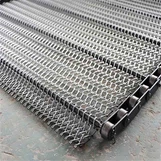
Stainless steel wire belts generally have a very low elongation rate due to the high strength of the stainless steel material. They are suitable for applications where high precision and minimal stretching are required, such as in heat treatment processes.
PTFE mesh conveyor belts also have a relatively low elongation rate, especially when reinforced. They are known for their high - temperature resistance and are often used in applications where the conveyor belt needs to withstand extreme heat, such as in baking or drying processes.
High - temperature silicone conveyor belts have a moderate elongation rate. They are flexible and can adapt to different conveyor system configurations. However, their elongation rate may increase at higher temperatures.
Selecting the Right White PVC Conveyor Belt Based on Elongation Rate
When selecting a white PVC conveyor belt for a specific application, it is crucial to consider the required elongation rate. If the application requires high precision and minimal stretching, a belt with a low elongation rate, such as one with multiple reinforcement layers, should be chosen. On the other hand, if the application is less demanding in terms of precision and the belt needs to be more flexible, a belt with a slightly higher elongation rate may be suitable.
Contact for Purchase and Consultation
If you are in the market for a white PVC conveyor belt and need more information about elongation rates or other technical specifications, I am here to assist you. Our team of experts can help you select the right belt for your specific application. Whether you are in the food processing, packaging, or any other industry, we have the knowledge and experience to provide you with a high - quality white PVC conveyor belt that meets your requirements.