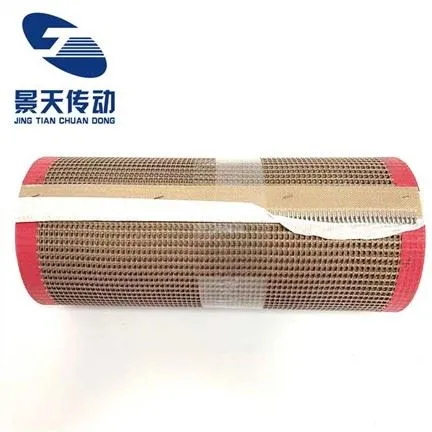
What materials are used to make punch hole conveyor belts?
Hey there! As a supplier of punch hole conveyor belts, I often get asked about the materials used to make these belts. Well, let's dive right in and explore the various materials that go into creating these essential industrial components.
PVC (Polyvinyl Chloride)
PVC is one of the most commonly used materials for punch hole conveyor belts. It's a synthetic plastic polymer that offers a range of benefits. Firstly, PVC is highly resistant to chemicals, making it suitable for use in environments where it might come into contact with various substances. This resistance helps to extend the lifespan of the belt and maintain its performance over time.
Another great thing about PVC is its flexibility. It can be easily molded into different shapes and sizes, allowing for the creation of punch holes in precise patterns. This flexibility also makes it a good choice for applications where the belt needs to bend around pulleys or follow a curved path.
The Black Diamond Pattern PVC Conveyor Belt is a prime example of a PVC-based punch hole conveyor belt. Its unique pattern not only provides good traction but also allows for efficient air circulation, which is important in many industrial processes.
PU (Polyurethane)
PU is another popular material for punch hole conveyor belts. It offers excellent abrasion resistance, which means it can withstand the wear and tear of constant use. This makes it ideal for applications where the belt is in contact with rough or sharp objects.
PU belts are also known for their high elasticity. They can stretch and return to their original shape without losing their integrity. This property is particularly useful in applications where the belt needs to handle varying loads or where there are sudden changes in tension.
The Pu Timing Belt With Green is a type of PU conveyor belt that combines the benefits of polyurethane with a green cloth coating. This coating provides additional protection and can enhance the belt's performance in specific applications.
Rubber
Rubber is a classic material for conveyor belts, and it's also used in punch hole conveyor belts. Natural rubber and synthetic rubber compounds are commonly used, each with its own set of properties.
Natural rubber offers high elasticity and good grip. It can handle heavy loads and is suitable for applications where a high level of traction is required. Synthetic rubber, on the other hand, can be engineered to have specific properties such as oil resistance, heat resistance, or flame retardancy.
Rubber punch hole conveyor belts are often used in industries such as mining, food processing, and manufacturing. They can be customized to meet the specific needs of different applications, including the size and pattern of the punch holes.
Fabric
Fabric-reinforced materials are also used in punch hole conveyor belts. These belts typically have a fabric layer that provides strength and stability. The fabric can be made from various materials such as polyester, nylon, or cotton.


Polyester fabric is known for its high tensile strength and dimensional stability. It can withstand high loads and is resistant to stretching. Nylon fabric offers excellent abrasion resistance and is often used in applications where the belt is in contact with rough surfaces. Cotton fabric is a more traditional choice and is known for its breathability.
The fabric layer in a punch hole conveyor belt is usually covered with a layer of PVC, PU, or rubber to provide additional protection and functionality. This combination of materials allows for a belt that is both strong and flexible.
Matt Conveyor Belt
The Matt Conveyor Belt is an example of a conveyor belt that can be made with different materials, including those used in punch hole belts. It has a matte finish that can provide better grip and reduce glare, making it suitable for a variety of applications.
Choosing the Right Material
When it comes to choosing the right material for a punch hole conveyor belt, there are several factors to consider. The first is the application. Different industries and processes have different requirements, so it's important to choose a material that can withstand the specific conditions of the application.
For example, if the belt will be used in a food processing environment, it needs to be made from a material that is food-safe and easy to clean. If the belt will be exposed to high temperatures or chemicals, it needs to be made from a material that can resist these conditions.
The load capacity of the belt is also an important factor. If the belt needs to carry heavy loads, it needs to be made from a material that has high tensile strength. The speed of the conveyor and the frequency of use also need to be considered, as these can affect the wear and tear of the belt.
Conclusion
In conclusion, there are several materials that can be used to make punch hole conveyor belts, each with its own set of advantages and disadvantages. PVC, PU, rubber, and fabric are some of the most common materials, and they can be combined in different ways to create a belt that meets the specific needs of an application.
If you're in the market for a punch hole conveyor belt, I'd be happy to help you choose the right material and design for your needs. Just get in touch with me, and we can discuss your requirements in more detail. Whether you're in the manufacturing, food processing, or any other industry, I'm confident that I can provide you with a high-quality punch hole conveyor belt that will meet your expectations.