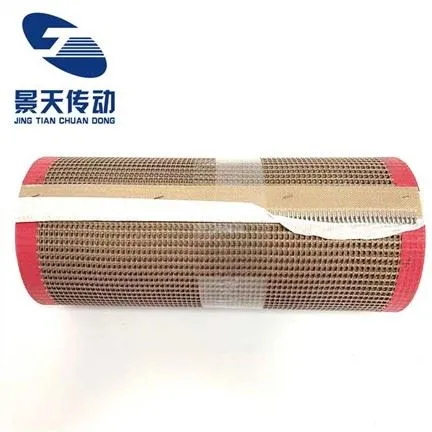
Nylon base conveyor belts are widely recognized for their versatility and durability in various industrial applications. One of the critical questions that often arises among potential users is whether these belts are resistant to chemicals. As a trusted nylon base conveyor belt supplier, I'll delve into this topic to provide you with a comprehensive understanding of the chemical resistance of nylon base conveyor belts.
Understanding Nylon Base Conveyor Belts
Before we discuss chemical resistance, it's essential to understand what nylon base conveyor belts are. Nylon is a synthetic polymer known for its high strength, abrasion resistance, and flexibility. In conveyor belt applications, nylon is used as the base material, often in multiple plies, to provide the belt with the necessary strength and flexibility to handle different loads and operating conditions.
Nylon base conveyor belts typically consist of a nylon carcass and a cover material. The carcass provides the belt's strength and dimensional stability, while the cover material protects the carcass from wear, abrasion, and environmental factors. The choice of cover material can significantly affect the belt's chemical resistance.
Chemical Resistance of Nylon
Nylon itself has a certain degree of chemical resistance. It is resistant to many common chemicals, including water, oils, greases, and some acids and alkalis. However, its resistance can vary depending on the type of nylon, the concentration of the chemical, the temperature, and the exposure time.
- Water and Moisture: Nylon has good resistance to water and moisture. It can absorb a small amount of water, which can cause some swelling and a slight reduction in strength. However, this effect is usually reversible, and the belt will return to its original properties once it dries.
- Oils and Greases: Nylon is generally resistant to mineral oils and greases. It can withstand long - term exposure to these substances without significant degradation. This makes nylon base conveyor belts suitable for applications in industries such as automotive, food processing, and manufacturing, where contact with oils and greases is common.
- Acids and Alkalis: The resistance of nylon to acids and alkalis depends on their concentration and temperature. At low concentrations and room temperature, nylon can resist many acids and alkalis. For example, it can withstand dilute sulfuric acid and sodium hydroxide solutions. However, at high concentrations or elevated temperatures, nylon can be attacked by strong acids and alkalis, leading to degradation of the material.
Factors Affecting Chemical Resistance
Several factors can affect the chemical resistance of nylon base conveyor belts:
- Cover Material: As mentioned earlier, the cover material plays a crucial role in the belt's chemical resistance. Different cover materials have different chemical resistance properties. For example, rubber covers can provide good resistance to a wide range of chemicals, while PVC covers are more resistant to acids and alkalis. When choosing a nylon base conveyor belt, it's important to select the appropriate cover material based on the specific chemicals the belt will be exposed to.
- Concentration and Temperature: The concentration of the chemical and the operating temperature can significantly affect the belt's chemical resistance. Higher concentrations of chemicals and elevated temperatures can accelerate the degradation process. For example, a nylon base conveyor belt may be able to withstand a certain acid at room temperature, but the same acid at a higher temperature or concentration may cause damage to the belt.
- Exposure Time: The longer the belt is exposed to a chemical, the greater the chance of degradation. Continuous exposure to chemicals can lead to cumulative damage, even if the chemical is relatively mild. Therefore, it's important to limit the belt's exposure time to chemicals as much as possible.
Applications and Chemical Resistance Requirements
Nylon base conveyor belts are used in a wide range of industries, each with its own chemical resistance requirements:
- Food Processing: In the food processing industry, conveyor belts need to be resistant to water, cleaning agents, and some food - related chemicals such as acids and salts. Nylon base conveyor belts with appropriate cover materials can meet these requirements. For example, a belt with a food - grade rubber cover can provide good resistance to common food - processing chemicals and is also easy to clean.
- Chemical Industry: In the chemical industry, conveyor belts may be exposed to a variety of strong acids, alkalis, and solvents. In these applications, special cover materials and belt designs are required to ensure chemical resistance. For example, belts with fluoropolymer covers can provide excellent resistance to a wide range of chemicals, including strong acids and solvents.
- Logistics and Warehousing: In logistics and warehousing, conveyor belts may be exposed to oils, greases, and cleaning agents. Nylon base conveyor belts with standard rubber covers can usually meet the chemical resistance requirements in these applications. For those interested in a suitable option for logistics, our Pvk Conveyor Belt for logistic offers good performance in such environments.
Improving Chemical Resistance
If you need a nylon base conveyor belt with enhanced chemical resistance, there are several ways to achieve this:
- Selecting the Right Cover Material: As discussed earlier, choosing the appropriate cover material is crucial. There are various cover materials available, such as rubber, PVC, and fluoropolymers, each with different chemical resistance properties. Consult with a conveyor belt supplier to determine the best cover material for your specific application.
- Surface Treatments: Some surface treatments can improve the chemical resistance of nylon base conveyor belts. For example, applying a chemical - resistant coating to the belt surface can provide an additional layer of protection.
- Proper Maintenance: Regular maintenance can also help to extend the life of the conveyor belt and maintain its chemical resistance. This includes cleaning the belt regularly to remove any chemical residues, inspecting the belt for signs of damage, and replacing worn - out parts in a timely manner.
Conclusion
In conclusion, nylon base conveyor belts have a certain degree of chemical resistance, but their performance can vary depending on several factors. By understanding these factors and choosing the right belt for your application, you can ensure that the conveyor belt will provide reliable service in a chemical - exposed environment.
If you are in the market for a nylon base conveyor belt and need to consider chemical resistance, we are here to help. Our company offers a wide range of nylon base conveyor belts with different cover materials and specifications to meet your specific needs. We also provide Light Thin Transmission Belt and Conveyor Celt Covered With Felt for various applications.


If you have any questions or would like to discuss your conveyor belt requirements in more detail, please feel free to contact us. We are ready to assist you in finding the perfect solution for your business.
References
- ASTM International. (2023). Standard Test Methods for Rubber Property - Determination of Resistance to Liquids.
- Plastics Europe. (2022). Properties and Applications of Nylon Polymers.