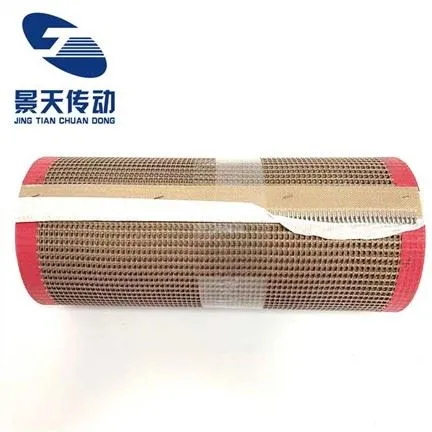
Hydrolysis resistance is a crucial property when it comes to silicon conveyor belts. As a trusted silicon conveyor belt supplier, understanding the concept of hydrolysis resistance and its implications for our products is essential. In this blog, we will delve into what hydrolysis resistance means for silicon conveyor belts, its significance, and how it impacts the performance and longevity of the belts.
Understanding Hydrolysis
Hydrolysis is a chemical reaction in which a compound reacts with water, leading to the breakdown of the compound into smaller molecules. In the context of silicon conveyor belts, hydrolysis can occur when the belt comes into contact with water or moisture over an extended period. This reaction can cause the degradation of the silicon material, leading to a loss of mechanical properties such as strength, flexibility, and adhesion.
Factors Affecting Hydrolysis Resistance
Several factors can influence the hydrolysis resistance of a silicon conveyor belt. These include the type of silicon material used, the manufacturing process, and the operating conditions.
Silicon Material
The type of silicon material plays a significant role in determining the hydrolysis resistance of the conveyor belt. Different grades of silicon have varying levels of resistance to hydrolysis. For example, high - quality silicone rubbers with specific chemical formulations are designed to have better hydrolysis resistance. These materials are often formulated with additives that can protect the silicon from the effects of water and moisture.
Manufacturing Process
The manufacturing process also affects the hydrolysis resistance of the conveyor belt. A well - controlled manufacturing process ensures that the silicon material is properly cross - linked, which can enhance its resistance to hydrolysis. During the manufacturing process, factors such as temperature, pressure, and curing time can impact the final properties of the belt. If the manufacturing process is not optimized, the belt may be more susceptible to hydrolysis.
Operating Conditions
The operating conditions of the conveyor belt can have a significant impact on its hydrolysis resistance. Factors such as temperature, humidity, and the presence of chemicals in the environment can all affect the rate of hydrolysis. For example, high temperatures and high humidity levels can accelerate the hydrolysis reaction, while the presence of certain chemicals can also increase the likelihood of hydrolysis.
Significance of Hydrolysis Resistance in Silicon Conveyor Belts
Hydrolysis resistance is of utmost importance for silicon conveyor belts for several reasons.
Longevity
A conveyor belt with good hydrolysis resistance will have a longer lifespan. Since hydrolysis can cause the degradation of the silicon material, a belt that is resistant to hydrolysis will be able to withstand the effects of water and moisture over a longer period. This means that the belt will not need to be replaced as frequently, reducing the overall cost of operation.
Performance
Hydrolysis can affect the performance of the conveyor belt. As the silicon material degrades due to hydrolysis, the belt may lose its strength and flexibility, which can lead to issues such as belt slippage, reduced traction, and even breakage. A belt with good hydrolysis resistance will maintain its mechanical properties, ensuring smooth and efficient operation.
Product Quality
In industries where the conveyor belt comes into contact with products, such as food and pharmaceutical industries, hydrolysis resistance is crucial for maintaining product quality. If the belt degrades due to hydrolysis, it may release particles or contaminants into the products, which can compromise the quality and safety of the products.


Our Silicon Conveyor Belts and Hydrolysis Resistance
As a silicon conveyor belt supplier, we take great care in ensuring that our products have excellent hydrolysis resistance. We use high - quality silicon materials that are specifically formulated to resist hydrolysis. Our manufacturing process is carefully controlled to ensure proper cross - linking of the silicon material, which enhances its resistance to water and moisture.
We offer a variety of silicon conveyor belts, each designed to meet the specific needs of different industries. For example, our Matt Surface Conveyor Belt is suitable for applications where a smooth and non - slip surface is required. The silicon material used in this belt has been tested to have high hydrolysis resistance, ensuring long - term performance.
Our Golf Pattern Conveyor Belt is another popular option. The unique golf - pattern design provides excellent traction, and the belt is made from a silicon material that is resistant to hydrolysis. This makes it ideal for applications where the belt may come into contact with water or moisture.
For applications that require conveying materials on an incline, our Incline Conveyor Belt With Cleats is a great choice. The cleats on the belt help to prevent the materials from sliding, and the silicon material has been engineered to have good hydrolysis resistance, ensuring reliable operation even in wet conditions.
How to Assess Hydrolysis Resistance
There are several methods to assess the hydrolysis resistance of a silicon conveyor belt. One common method is to conduct accelerated aging tests. In these tests, the belt is exposed to high temperatures and high humidity levels for a certain period of time. After the test, the mechanical properties of the belt, such as strength and elongation, are measured and compared to the initial values. A significant decrease in these properties indicates that the belt has been affected by hydrolysis.
Another method is to analyze the chemical composition of the silicon material before and after exposure to water or moisture. This can be done using techniques such as Fourier - transform infrared spectroscopy (FTIR) or X - ray photoelectron spectroscopy (XPS). These techniques can detect changes in the chemical structure of the silicon material, which can indicate the occurrence of hydrolysis.
Maintaining Hydrolysis Resistance
To ensure the long - term hydrolysis resistance of our silicon conveyor belts, proper maintenance is essential. This includes regular cleaning of the belt to remove any dirt, debris, or chemicals that may accelerate the hydrolysis process. It is also important to avoid exposing the belt to extreme temperatures and humidity levels.
If the belt is used in an environment where it is likely to come into contact with water or moisture, it is recommended to use a protective coating or treatment. These coatings can provide an additional layer of protection against hydrolysis.
Conclusion
Hydrolysis resistance is a critical property for silicon conveyor belts. It affects the longevity, performance, and product quality of the belts. As a silicon conveyor belt supplier, we are committed to providing high - quality belts with excellent hydrolysis resistance. Our range of conveyor belts, including the Matt Surface Conveyor Belt, Golf Pattern Conveyor Belt, and Incline Conveyor Belt With Cleats, are designed to meet the diverse needs of different industries.
If you are in the market for a silicon conveyor belt with high hydrolysis resistance, we invite you to contact us for a detailed discussion about your requirements. Our team of experts will be happy to assist you in selecting the right belt for your application.